Thoughtful Foods: The Sustainable Food Cooperative No One Knows About
UNSW’s best-kept secret that might just be your new favourite grocery store
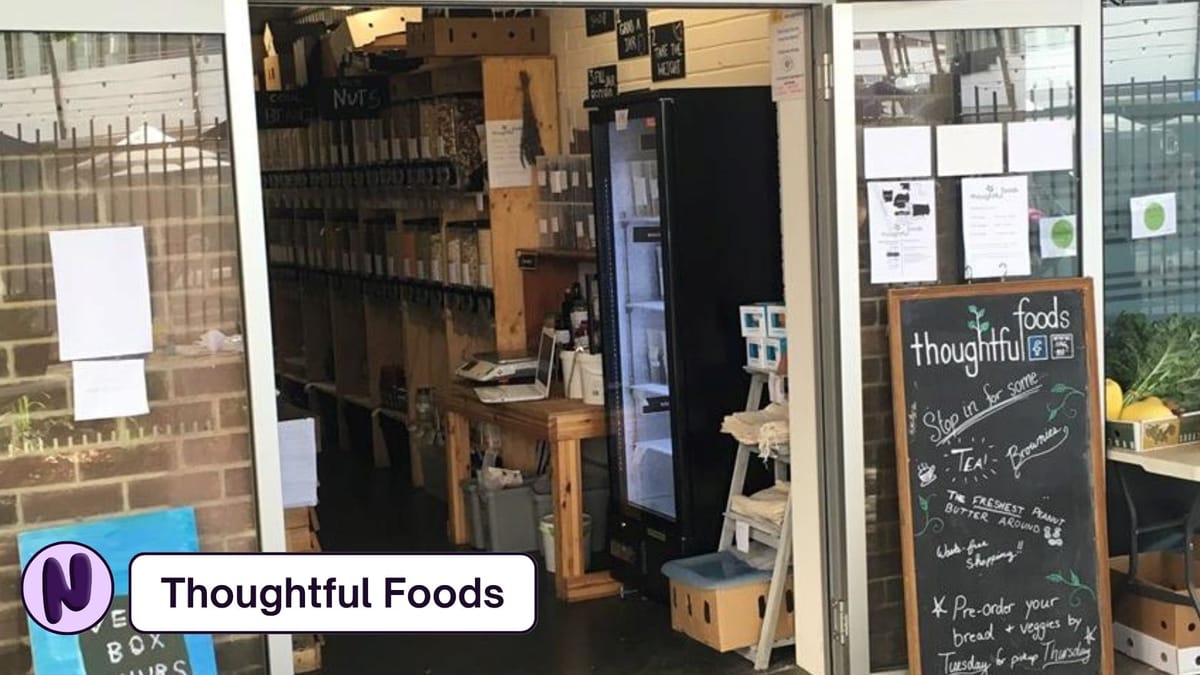
If you’ve ever gone exploring around UNSW’s lower campus, then you may have stumbled across an unexpected “mouse hole” in the wall behind the Roundhouse. While some students may have heard whispers of this (quite unintentionally) hidden gem, many more would have wandered past its doors without a second thought about what lay inside. But for those who do venture in, a surprise cornucopia of affordable, sustainably packaged, and ethically produced wholefoods and pantry items awaits.
Originally founded in 1994, Thoughtful Foods has undergone rebrandings, relocations, and a global pandemic to get to where it is today. But, throughout all these changes, it has remained, at its core, the same not-for-profit volunteer cooperative it was thirty years ago. Its goal now, as it was then, is to source ethically, socially, and environmentally conscious products for students, staff, and the wider UNSW and local community. It is managed and run entirely by its members, who each hold an equal share of the business and have an equal say in the decision-making process. And the best part? The more involved you are in its operations, the more you save on your groceries.
I sat down with Chrishelle, one of the members who make up Thoughtful Foods’ engagement team, to discuss the cooperative’s operations on UNSW campus, its sustainable practices, and Chrishelle’s own experiences as a volunteer member.
“Every time a customer is like, ‘What is this place?’ I'm like, ‘Let me tell you.’” Chrishelle explained, when I asked for her basic run-down of what Thoughtful Foods is, and what they do on campus. She expressed that, like me, many UNSW community members have never heard of the cooperative before they end up stumbling across its store. “It's just a regular bulk food store … [You come in], and you don't have to deal with that annoying thing in recipes where they're like ‘One teaspoon of mustard seeds’, and you have to go out and get a whole thing. It solves that problem … Even if you're not a member, you can just come by.”
“[But] the most important thing about it is that it's a cooperative controlled by its members. You buy a $10 share as part of your membership, and this share makes you a co-owner! This is one of my favourite things about the shop – we all own it a little. When I'm on shift, it makes me feel more grounded ... It's a small society that thrives off of each other ... We're all really passionate about food waste.”
This passion for reducing food waste has been at the core of Thoughtful Food’s mission since its inception. However, some of their most basic tasks end up producing the most surprising challenges for the cooperative’s members. Thursday is compost day at Thoughtful Foods, but, as Chrishelle explained, “I notice a lot of poor waste management practices around the uni: overflowing bins, rubbish in the wrong places, uncrushed boxes taking up all the space. When I take our compost out to the food organics bin, it's usually empty, except for the bits of food waste I've added from my own [on campus] apartment. I just hope that even a small amount of food waste diversion can still make a difference.”
Not much of Thoughtful Food’s fresh produce ends up making the journey to this compost bin, though. “It's mostly just tea leaves and onion skins ... We have this swap box for the veggie tubs, where if a customer is like, ‘Eew, cucumber’, they'd put it back, and take two oranges instead … all of that swap box stuff, we distribute it through [the veggie tubs] so we have no waste at all … Even if a customer forgets, it goes straight to Food Hub. There's a lot of collaboration.”
The packaging used in their store also plays an important role in their sustainability. “We are completely BYO, especially on Thursdays … customers bring their own bags, put all the veggies in, and then go home … It's so nice how customers bring their own little glass jars, and they're all matching, and they have their little labels. But if you do forget, we also have glass mason jars … We keep leftover [boxes] [so customers who have forgotten their bags] can come and use them … Sometimes we'll send the boxes back to the vegetable places so they can reuse them.”
“Because we're small, we can keep a good track of what we sell.” Chrishelle elaborated, “We always try to look for organic and ethically produced products. It can be tricky ... I've seen our stock coordinators struggle sometimes with finding products that fit within these guidelines, but selling good quality food, household, and beauty supplies will always be very important to us.”
“I think what makes a co-op a co-op is just how connected we are. We stage these regular potlucks … It's an opportunity to use Thoughtful Foods ingredients, or the stuff out of the veggies boxes, to make something delicious [and] nutritious … We have a bulletin every single week that releases new recipes, [and] it'll have a focus on whatever veggies are in the box for that week.”
The interconnected community of Thoughtful Food’s cooperative and the exciting way it encourages members to step out of their comfort zones and experiment with their cooking aren’t the only benefits – the process of becoming a member isn’t particularly difficult, either. “The discount is really, really good.” Chrishelle emphasised, “The first thing I did [was email the] office at Thoughtful Foods. And I was like, ‘Hey, I would love to become a volunteer’ … They walk you through this online induction process. It's not too hard at all. It's like a little book on what a co-op is, what it means to be a member, why you have to become a member first, why it's actually important. I remember being really fascinated [because] I had never actually heard of what a co-op was … We did a short screening call, where you just meet one person, usually a director, and they'll tell you just a bit about what it's like, and your expectations of working there.”
“Then they schedule [the] first induction shift, and you have two buddied shifts, until you're a baby bird, out into the sky, you're off on your own … I thought it was really scary at first … But I found my induction process quite easy ... They'll have a checklist, have all this stuff about these really specific wipe-downs, and checking the fridge temperature. I was a little intimidated, but everyone there is so nice … I feel like I've got this deeper appreciation for [doing] things right … I've had fun. I'm still having fun.”
If you’d like to find out more about Thoughtful Foods, you can visit them on UNSW Kensington campus on Tuesdays, Thursdays, and Saturdays; follow them on Instagram @thoughtfulfoods; or go to their website, thoughtfulfoods.org.au.