NUTS’ “Othello” Review
Shakespeare’s traditionally difficult to perform play, Othello, takes to the stage.

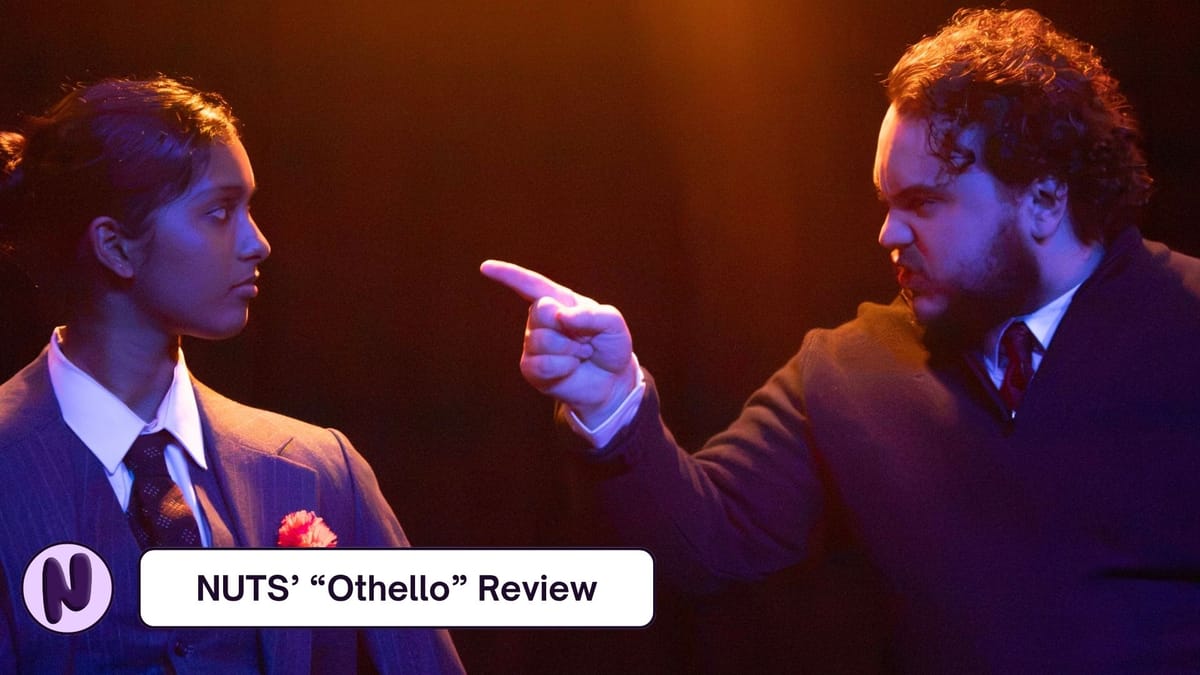
Before entering the Esme Timbery Theatre to watch the New South Wales University Theatrical Society’s (NUTS) performance of Shakespeare’s seminal play Othello, the viewer is met with a somewhat monotone speech from the production’s director, Rayyan Khan. Khan provides some warnings about what the production contains: violence, domestic abuse, guns, gunshot sound effects… the list is extensive. However, as one finds out upon entering the performance space, even with an exhaustive list of warnings, the NUTS production team had somehow forgotten to mention something key to the performance. The use of real cigarettes. It’ll be of no surprise to the reader then, that as I took my seat in the theatre, my lungs were accosted with second-hand smoke—a common feature of this production. It’s an element that felt a tad self-indulgent, especially considering the prevalence of herbal cigarettes and the fact that some of the cast were very clearly not smokers, going as far as to light a cigarette from off stage to give the illusion that Cassio (Euan Howells) was smoking.
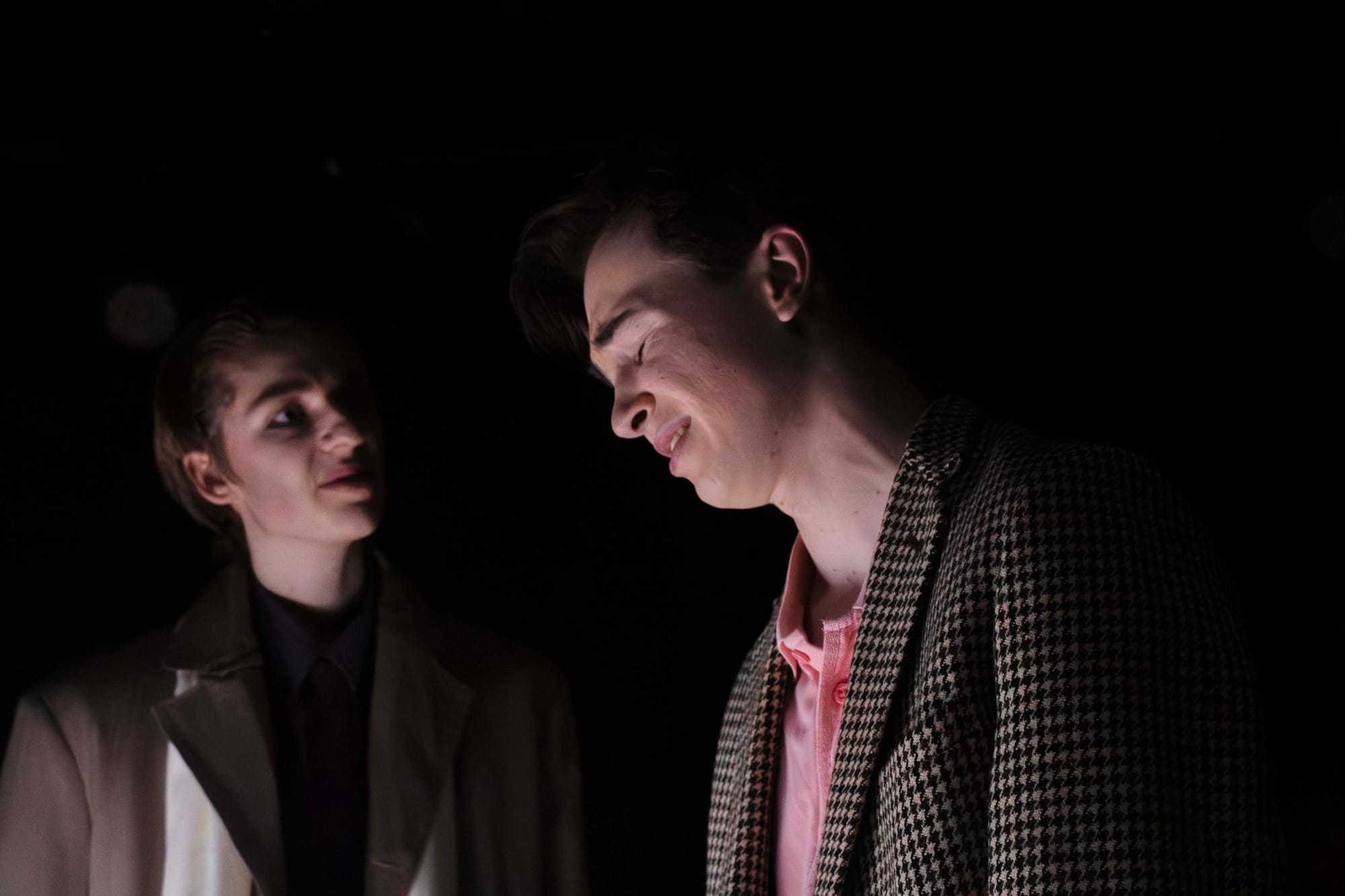
Image Credit: George Tsakiris
The production got off to a rough start, but luckily for the NUTS team, it only went up from here. Within minutes, I was well acquainted with the character of Iago (Ruben Kemp-Burrows), who strutted across the relatively small stage with the bravado of a young David Bowie. Kemp-Burrows provided by far one of the stand-out performances of the show. It’s undoubtedly a challenge to play such a devilish, two-faced character, but Kemp-Burrows managed to pull out a performance which was laden with swagger, emotional depth and what seemed like genuine integration into Shakespeare’s writing. While he occasionally messed up a line or two, he recovered so quickly that I never felt it significantly affected his overall performance.
Ben Moody’s Roderigo was equal parts hilarious and wimpy. While I found Moody’s performance often failed to completely convince me he was a drunk, his dedication to spending many minutes under tables, chairs and boxes must be commended. I always let out a laugh when he was on stage.
What I once thought was a disrespectful audience member snoring in the back of the theatre was, in fact, Brabantio (Adian Hale), whose booming, over-the-top performance felt right at home for the character. Hale’s performance was not only engaging but also provided some much-needed humour in a production that is often an intense back-and-forth of monologues and speeches.
For the couple in question, Othello (Kathleen Thomas) and Desdemona (Summer Douar), I am in two minds about their performances. On the one hand, together the two clearly had little chemistry (I often had to remind myself they were actually a couple). However, I found both actors, especially Douar’s Desdemona, to be extremely compelling. In fact, when the production reached its climax, the lack of chemistry worked in their favour as I truly felt a rift between Douar and Thomas. At times Thomas’ performance seemed to drag on a bit—although one may blame Shakespeare for that, not the casting. Thomas also might need some boxing lessons after performing what I can only describe as the weakest punches I have ever seen from an army ‘general.’ Regardless, the overall performance was strong, even if it occasionally missed the mark.
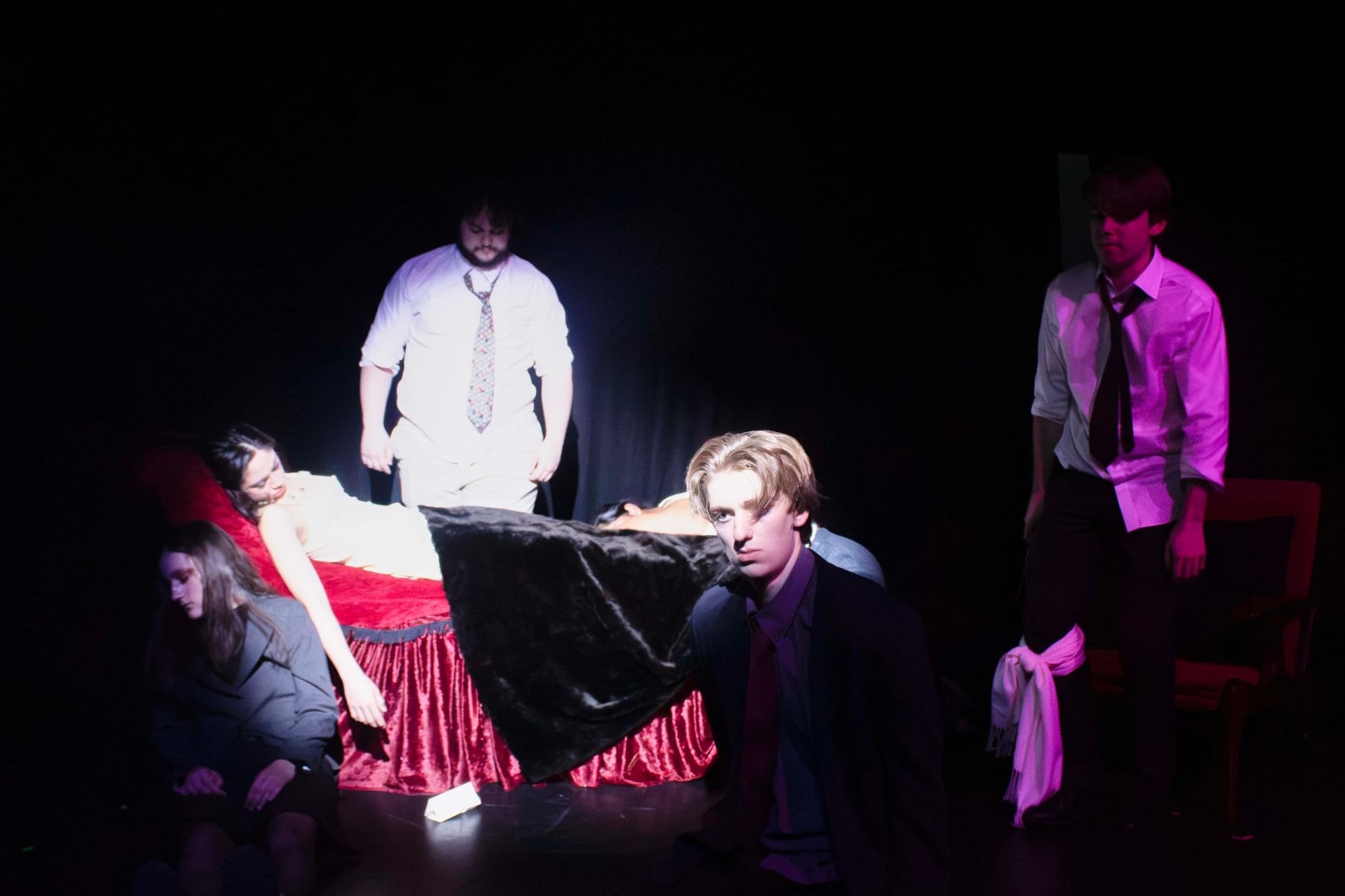
Image Credit: George Tsakiris
Now for a rapid fire review of the rest of the cast: Cassio (Euan Howells) spent a lot of the show being a bit mopey, which is an element of Cassio’s character, but combining this with Howells’ slightly reserved performance occasionally detracted from the overall intensity of scenes he was in. Emilia (Nina Schief) is an often-overlooked character in Othello as she spends most of the play being thrown around by Iago. However, the character does get a brief opportunity to shine towards the end, and Schief delivered it with fiery words and emotion, making her character feel criminally underutilised. Tom Crennan as The Duke was solid for the little time he had on stage, and Bianca (Aimee Crispin) is my pick for most underrated performance of the production; she absolutely dominated any scene she was in with equal parts wit and charm.
I’ve spent a lot of time discussing the performances as I felt it redundant to just recount one of Shakespeare’s best-known plays to the reader. However, I would be remiss if I didn’t mention the other crucial aspects of the performance: the sound and lighting. The sound in the theatre was nothing short of exceptional. Sound effects were well-timed and clear, and the music was present just enough to be mood-setting but not distracting. Continuing the trend of fantastic production, the lighting was also superb. I noticed a lamp which didn’t seem to be plugged in, and after some time carefully observing the set, I could only conclude it was being powered by shining a stage light into the lamp shade—meaning the lightbulb never turned on at all. This technique was nothing short of genius.
The set design was sparse with a small collection of chairs and tables, but the crew moved them around with ease such that the audience never had to wait too long for the next scene. An assumedly unintended humorous moment occurred when a character went to sit down on a large couch and, in doing so, let out a huge cloud of dust from the couch. Thus, it’s easy to say the props and set design were period accurate. However, the time period itself was difficult for me to pin down. Costumes were fantastic, with trench coats, tweed jackets and suits screaming 1920s, but the use of leather and leopard print (80s) and cellophones (90s) left me confused as to when the production was actually set.
Fortunately, the setting itself is of little consequence to the story, a story which is uniquely complex. Othello does not contain great wars or crusades, but instead domestic struggle and intrigue. Characters have several allegiances and motivations, and thus Othello is traditionally a very challenging piece to perform. In order to overcome these challenges, Khan grounded the play with just a handful of rooms and environments. Combining this with the strong lead cast I’ve already discussed, the production team has managed to meet the challenges in performing Othello.
Overall, NUTS’ Othello was a resounding success. While some parts dragged and some performances were hit or miss, the NUTS team has managed to pull off one of Shakespeare’s most challenging works with skill far beyond their years.