The 2025 Election State of Play
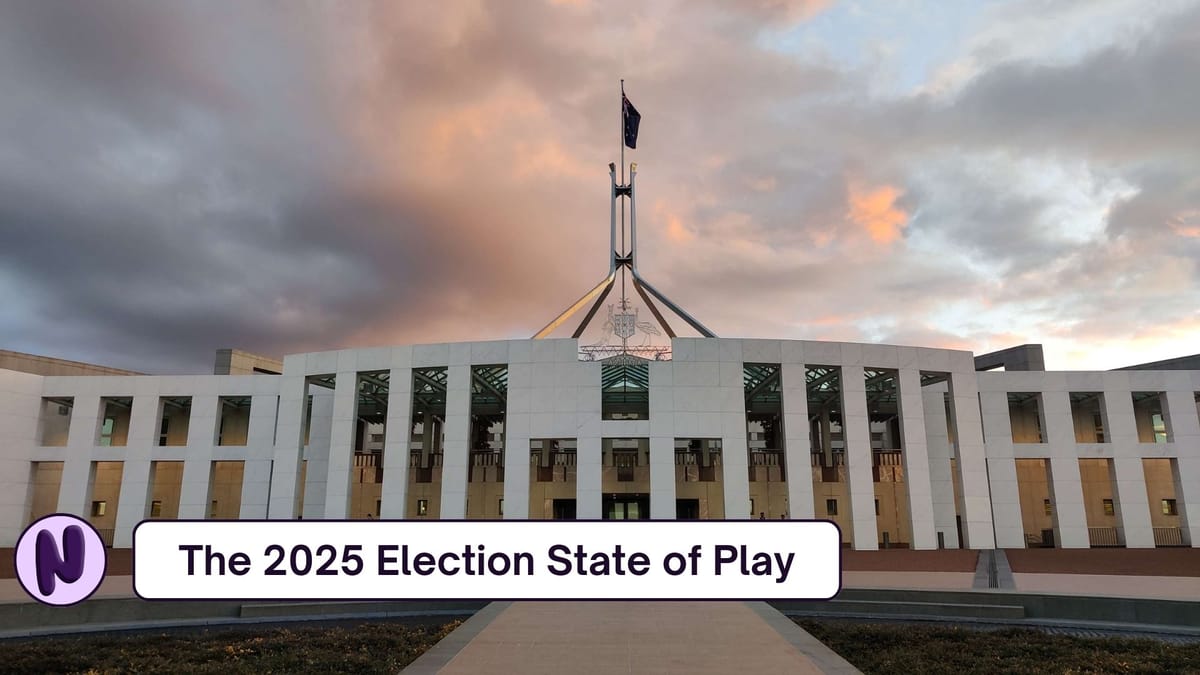
As the 2025 Federal election countdown begins, Billy analyses the major party's expectations.
It seemed last election that the Liberals, having suffered their worst defeat and their worst result since their first election in 1946, were going to be stuck in the political wilderness for some time. The Albanese Labor government, despite only just holding a majority, plus one, had a historically long political honeymoon. The scandals from the former government kept coming. It was only after the election that it was revealed the preceding Prime Minister Scott Morrison had secretly had the Governor General swear him into multiple other ministerial portfolios including the treasury. While the justification was that this was to ensure the business of government could get done should a minister fall ill during the COVID pandemic, the only use of these powers was to overrule the environment minister and scrap a contentious mining proposal off the coast from many Liberal seats in NSW. The Labor government went on to win a seat off the opposition in a by-election in 2023, the first time this had happened since 1920. The prize – the Melbourne seat of Aston, last held by Labor 33 years prior. At that moment it seemed like the government could go on for a decade or more; now it isn’t certain they can even win a second term.
Much of this change in fortune for the government comes down to the usual suspects – the economy, mid-term blues, as well as some unique circumstances. The failure of the Voice referendum certainly took the varnish off a government that thought it could defeat historical precedent and win without bipartisan support.
The high cost of living is pushing many to give Albo a thumbs down the next chance they get at the polls. While this doesn’t translate to an automatic transfer of preference from Labor to Liberal, this will be the case for many. Polling for Independents and the Greens have also improved since both broke records last election, giving non-major party (crossbench) candidates 16 seats total. The Liberals lost more seats than Labor gained, meaning Labor can’t afford to lose any seats from their 2022 numbers next election if they want to avoid negotiations with the crossbench. The problem is the last three governments all lost seats going into their next term, at an average of 13 seats. No government in Australia has had a swing towards them going into their second term, and only once has one gained seats (a result of a net increase of electorates across the nation). Why do first-term governments always get this treatment?
To put it simply, governments age like dogs and cats. They only last you about 15 years at maximum and they stop being cute very fast. By the same token, plenty of people will vote in a government just to get rid of one they are tired of, and at the next election go right back to their usual voting patterns. There are many competent governments from history. But there are no immortal ones.
The large presence of independents makes this upcoming election unique. If neither party gets a majority they will have to negotiate with the Independents and minor parties. If one party is only a few seats short and the other far behind, I would suspect (but cautiously withhold certainty) that this is the party that will form the government. With such a massive crossbench there are sure to be a handful of MPs more eager to support one party over the other. However, if both parties are far off the mark, the negotiations will no doubt go on far longer, likely with much bigger demands from the larger-than-normal crossbench.
So, is there anything that Labor should feel optimistic about? Well, they do have a few glimmers of hope. Firstly, the government is bouncing back in the polls, neck and neck in some and slightly ahead in others. These are likely to change from here on out though, so don’t hold your breath – your preferred side could yet gain an advantage. Polls can change rapidly and drastically. Due to the tariffs placed on Canada by the U.S., the current governing party in Canada has seen around a 30 percent swing back towards them after being a terminal 25 points behind the opposition. For the two years prior to the 2019 Australian Federal election, which saw Scott Morrison score a ‘miracle’ win against Labor, the Liberals had lost every single poll. The two-party preferred poll may be the one everyone watches, but that hides the growing portion of voter backing independents. The so-called ‘Teal’ independents backed financially by Climate 200 could grow their ranks. They have certainly widened their aim, targeting more opposition and government seats along with the ones they helped win for Independent members in the 2019 and 2022 elections. Climate 200 has been electoral poison for the Liberals in the inner city particularly, giving voters the chance to back someone who isn’t from Labor and isn’t shackled to the Coalition when it comes to climate policy. The National party, who lost zero seats last federal election, also helped to destroy the Liberal’s climate credibility. This may be why Dutton seems to be trying to appeal to more working-class voters (or at least alienating even more inner-city voters) with his consistent socially conservative stances. He mightn’t want those Teal seats back now, given the socially progressive streak that runs through politics in those areas. Every one of those seats he gains back is potentially another socially progressive Liberal MP who’ll be inclined to axe Dutton given the chance. The question remains whether there are enough votes out there for the Liberals to make up for the exodus of their old voter base.
Queensland Labor last year also managed to blunt the predicted surge in the Liberal vote in last year's state election, which initially was projected to be something of a wipeout for the state government. This demonstrates, as does the example in Canada, that actually trying to win the election helps. Albo is doing quite well in the pre-election promises department, and Dutton is having to toe the line and promise to match the cost-of-living measures announced thus far. It was largely cost of living measures that juiced the Queensland Labor campaign, despite the Liberals matching many of their policies. This could end up being the crux of the election campaign nationwide. Don’t expect much moving ground in Queensland though. Labor’s seat count in the state has been in the single digits since 2010. In 2007, led by a Queenslander, Kevin Rudd, Labor was able to win a majority of the seats in Queensland. Now they hold just 5 out of the 30 total seats in the state. Since the Liberals and the Nationals are currently led by Queenslanders, it’s most likely that they will hold their ground, if not improve their standing in the state. We’ll see how keen the rest of the country is about them soon. There’s some concern for the Greens, with the 2 seats they took from Coalition last election, though they may be able to snag another off Labor in Queensland. So the seat changes, if there are any, will largely be a shuffling exercise to Labor’s detriment.
The real thing that will have Albo breathing a sigh of relief is the recent state election victory for Labor in Western Australia. It was another landslide defeat for the liberals, though not quite the “decapitation” (as one Liberal MP put it) that they received in the last state election. This buoys hopes that Labor will retain the gains they made in the West last federal election. This isn’t to say Labor has an easy job ahead of them to get reelected, but it’d be silly to assume all the cards they’ve been given are duds.
Still, it’s the Liberals that will be more hopeful – of either entering government, or at the very least scoring a body shot on the Albanese administration. Peter Dutton as leader has made some missteps though, which has drawn quite a bit of whispering from worried Coalition colleagues of his. He’s largely stuck to beating the drums of war – oftentimes culture wars, with a bit of what PM Albanese called ‘super-marxist’ supermarket policy to round things off and scare his colleagues in a different direction. Super-Marxist or not, he has shied away from being super-detailed with what exactly he wants to do when he gets the job he has been foaming at the mouth for since at least 2018 when he first ran for Liberal leadership. As shown by his Nuclear power policy, he is not one to let his big ideas be held back by detail or reality. It’s not a strategy that’s gotten him far ahead at any point, but a long manifesto is often not the virtue it sounds like it would be in politics. In 1993, Paul Keating’s opponent had pulled out a 650-page manifesto and then dared him to call an early election. Keating’s famous response to why he wouldn’t do that was “because I want to do you slowly”. Turns out the more detail you show, the more that can be used against you. As mentioned above, Keating won in 1993, using that big manifesto to give the Liberals a thumping with.
In an election that is now neck-and-neck, many minds are yet to be made up. No matter how much anyone insists, it is still anyone’s game. It’ll likely come down to what each party decides to bring to the conversation on the campaign. It may very well come down to the question of who can shoot themselves in the foot first.
Further Reading
https://newsinteractives.cbc.ca/elections/poll-tracker/canada
https://youtu.be/cVUsoeAc09k?si=HQQ0rNLoWBohFDWi