Representation in Australian politics: Lessons from the marginal seat of Fowler
Jeanette highlights the influence of diversity and representation in the 2025 Federal election.
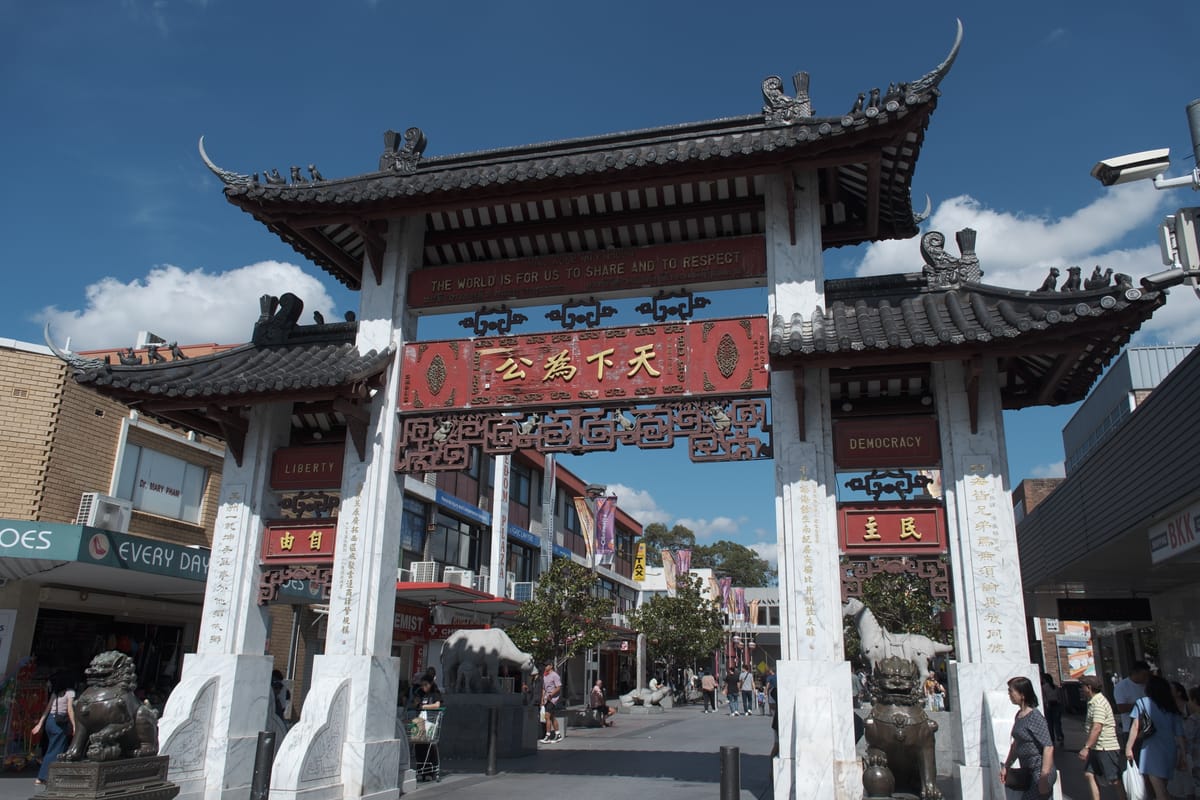
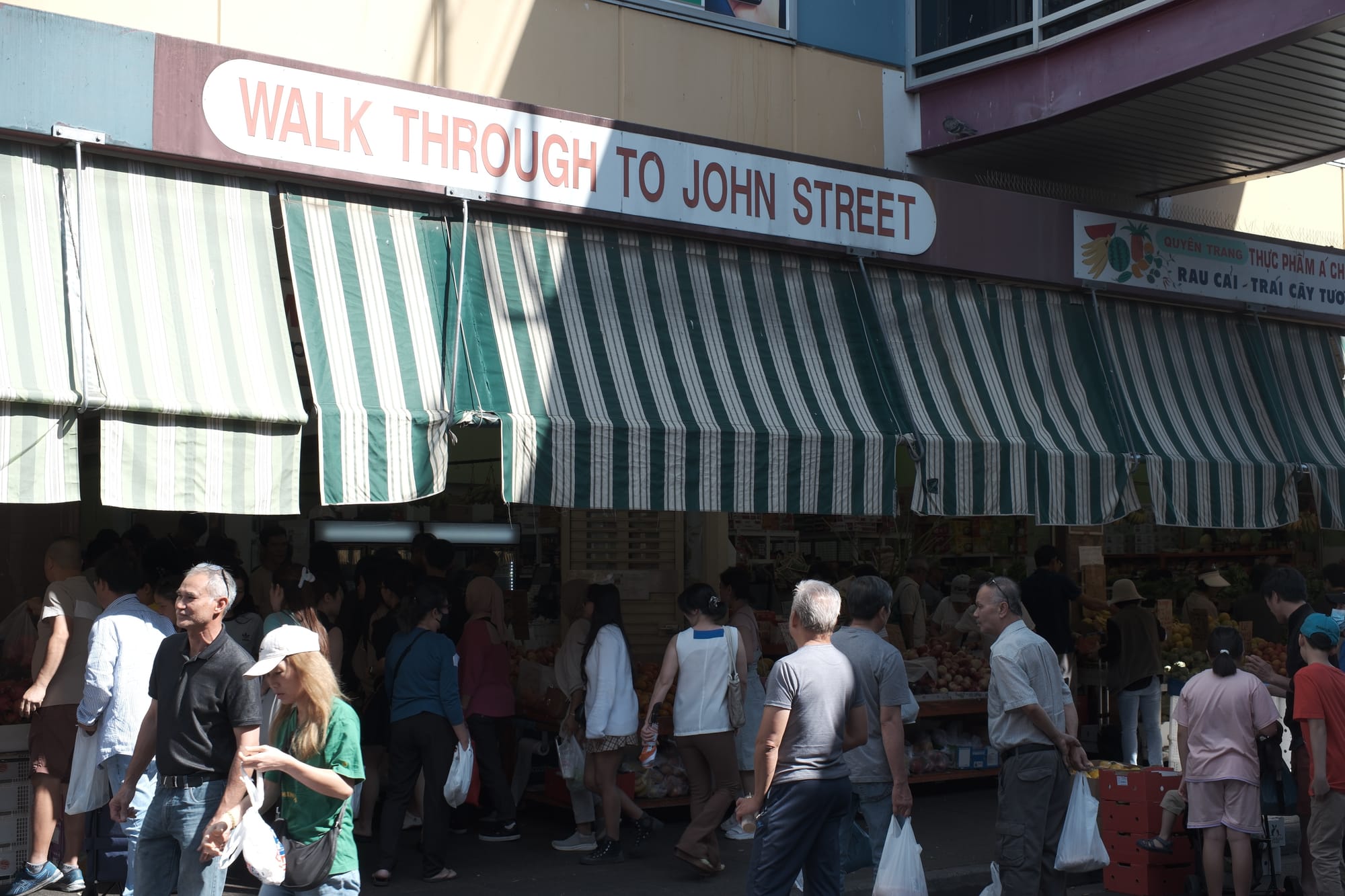
Walking down the streets of Sydney suburb Cabramatta, you will be greeted by wafting scents of dim sum from the local Chinese yum cha spot, sounds of conversations in native tongues, and the vibrant sights of múa lân, a Vietnamese dance performed in lion costumes to promote good luck and fortune.
Multiculturalism and diversity are defining characteristics of NSW electorate Fowler. According to the Australian Bureau of Statistics’ (ABS) 2021 Census data, 60.9% of Fowler’s population were born overseas, with 83% having at least one parent who was born overseas.
The division, which spans over 60 square kilometres, lies at the heart of Sydney’s south-west and encompasses suburbs including Cabramatta, Liverpool, and Prairiewood.
Public demand for greater representation and inclusivity in Australian politics is playing out in electorates like Fowler, where voters are becoming more involved and challenging the notion of ‘safe’ seats.
Looking back at the 2022 Federal Election
The historically overlooked election race for the Fowler seat was propelled into national headlines at the last Federal Election. In 2022, a 15.6% swing to Independent Dai Le put an end to Labor’s stronghold of the electorate since its conception in 1984.
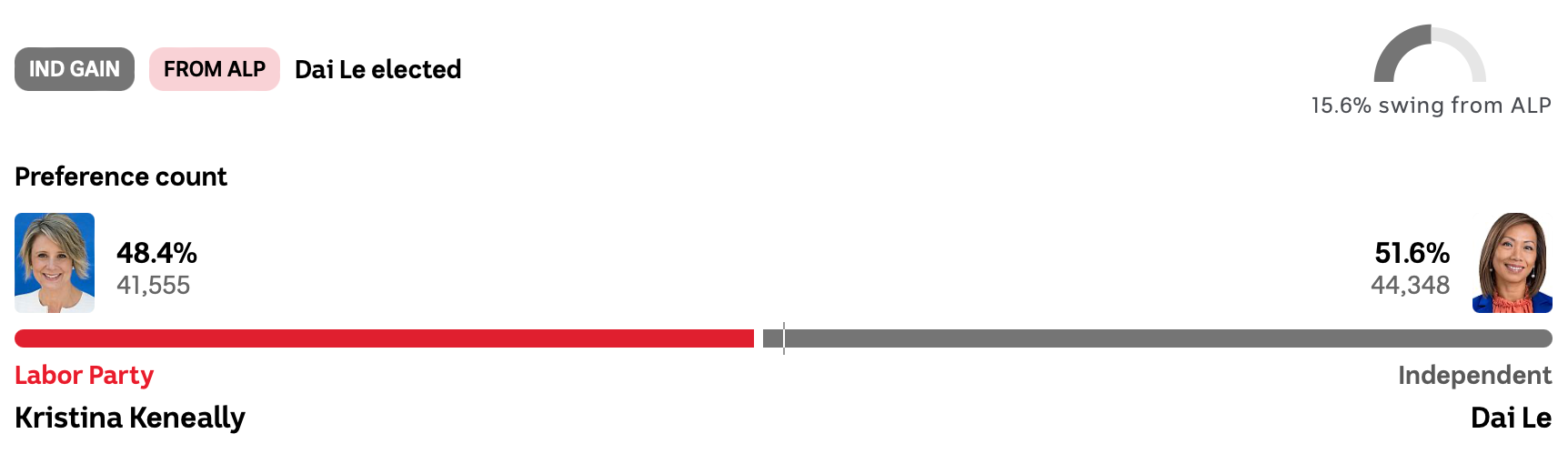
The 57 year-old Fowler MP fled the conflict of the Vietnam War when she was only 7 years old, travelling with her family to refugee camps by boat before arriving in Australia in 1979.
Despite Fowler’s culturally diverse demographic, all three of Dai’s predecessors have possessed strictly European ancestry. Outgoing MP Chris Hayes held the seat for 12 consecutive years before announcing his retirement in March 2021.
Dai’s win followed the Labor Party’s controversial decision to ‘parachute’ former NSW Premier Kristina Keneally into candidacy, instead of standard rank and file processes where local party members decide upon a candidate for preselection. At the time, Labor was accused of sidelining Hayes’ frontrunning pick and Fowler community local, Tu Le.
Keneally, an American-born Senator, had temporarily relocated from her residence on Scotland Island along Sydney’s affluent Northern Beaches to a rental property in Liverpool as she campaigned in Fowler’s communities.
The former Premier was ultimately unsuccessful against the locally connected Dai, who concurrently represents the City of Fairfield as a Councillor and previously served as Deputy Mayor of Fairfield City Council.
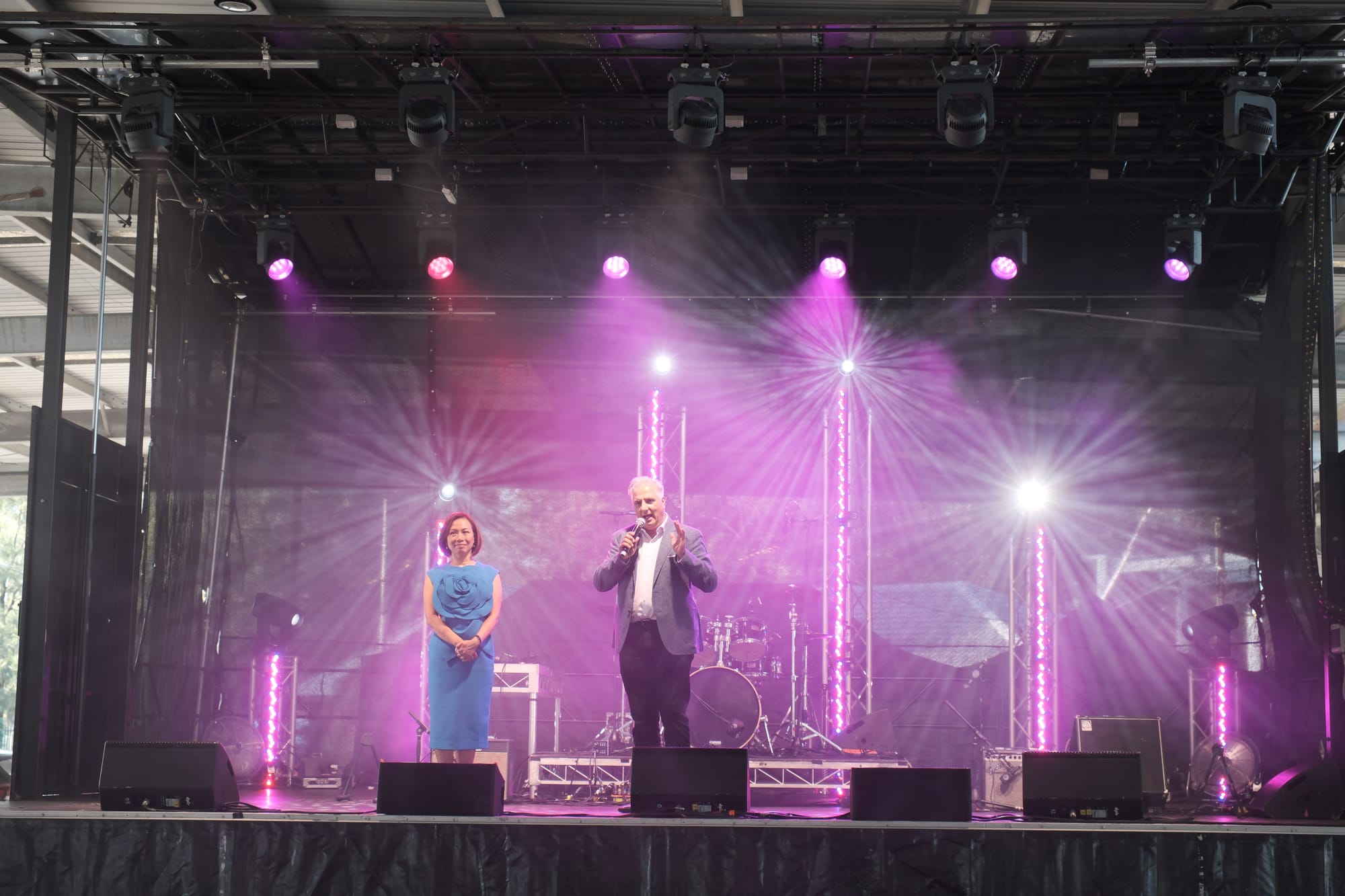
To law student and Fowler resident Marcus Lanch, visibility and engagement is crucial to garner the support of local communities. Lanch will be voting for the first time at the Federal level on 3 May 2025.
“During the last election, I saw Dai Le everywhere in the community and with local organisations. I couldn’t say the same about Kristina Keanelly.”
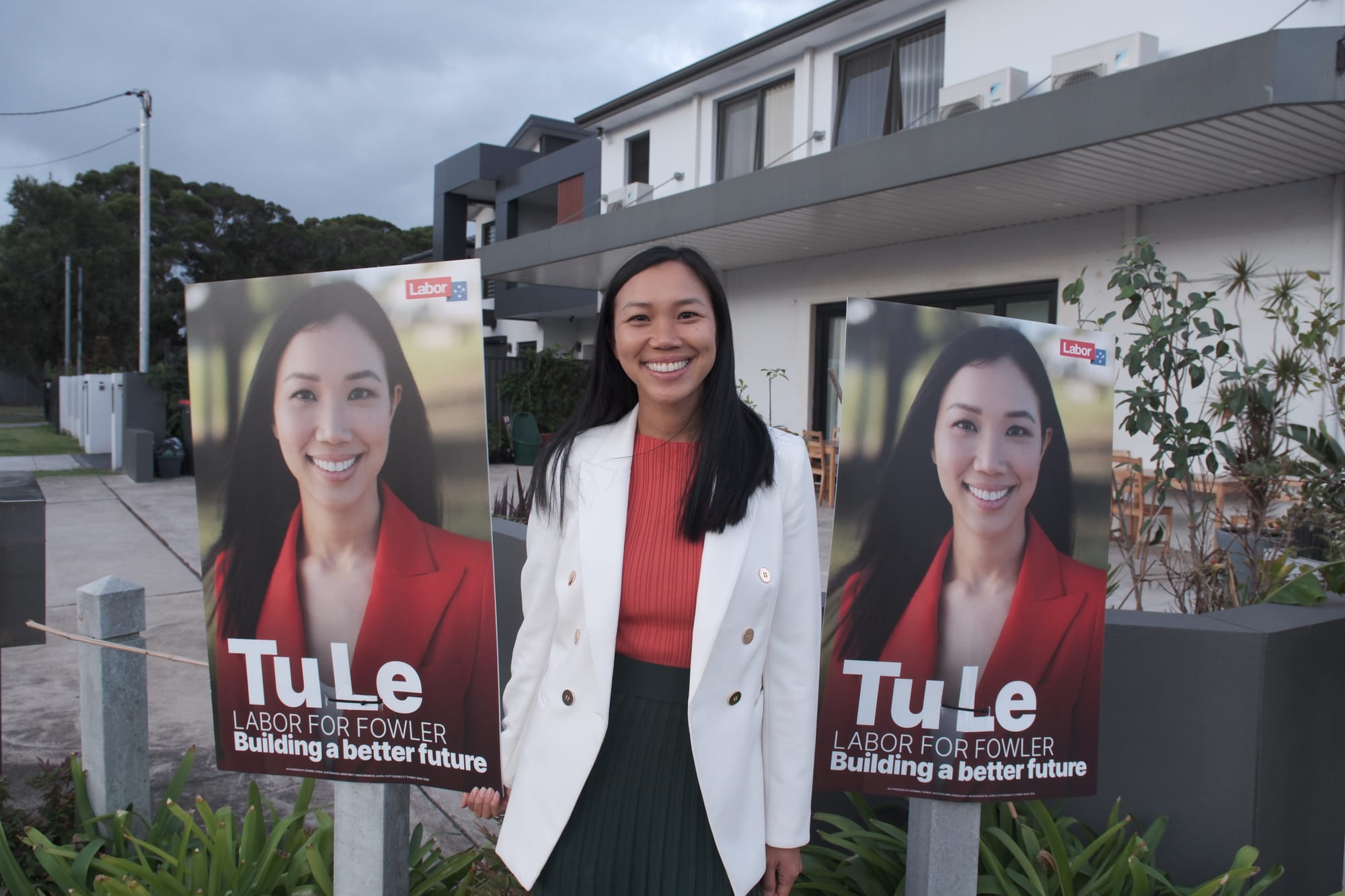
On 4 October 2024, Anthony Albanese announced Tu as Labor’s candidate for the 2025 Federal Election at a press conference in Cabramatta.
With the election less than a week away, the 34 year-old community lawyer and mum-of-two is fighting to restore the Fowler seat into Labor’s hands.
“There was a very visceral response to the Labor Party’s decision,” said Tu, reflecting on previous events. “I think the results speak for themselves. One of the so-called safest seats in the country was lost.”
“It was wrong and we paid the ultimate price for it.”
Earlier this month, Albanese acknowledged error in the party’s past decision during a visit to Cabramatta Public School with the current candidate.
Similarly in the seat of Parramatta, Labor was accused of ‘parachuting’ former party staffer from Sydney’s eastern suburbs, Andrew Charlton, over local candidates.
Charlton moved from his $16 million home in Bellevue Hill to North Parramatta in western Sydney after announcing his candidacy, where he was successful in winning the marginal seat with a 1.1% positive swing.
In an interview with The Guardian, outgoing MP Julie Owens criticised Labor’s choice and emphasised the importance of local preselection processes.
Since 2021, Tu has not shied away from voicing her disappointment towards Labor’s snub, labelling the move “tone-deaf”. Despite the public rift, the 34 year-old has embraced the party’s rectified decision and acknowledges the race as a cause carrying broader significance.
“It’s about my community, and that’s why I’m still here. Unfortunately, we have to be a bit more resilient, push the boundaries a bit, and shift the dial and make sure that we stand up for ourselves. That’s how we’re going to get that change that we want to see.”
How representative is the Federal Government?
For Lanch, representation in government is crucial to ensure the diverse backgrounds of his community are heard.
“What about the people who can’t speak English, or don’t really understand politics?” the 19-year-old said. “Members are able to refine those voices and bring them to Parliament; to advocate for social and economic policies that would specifically benefit the south-west.”
Fowler is home to the nation’s third highest population of non-English speakers, including the highest and third-highest shares of Vietnamese and Arabic speakers, respectively.
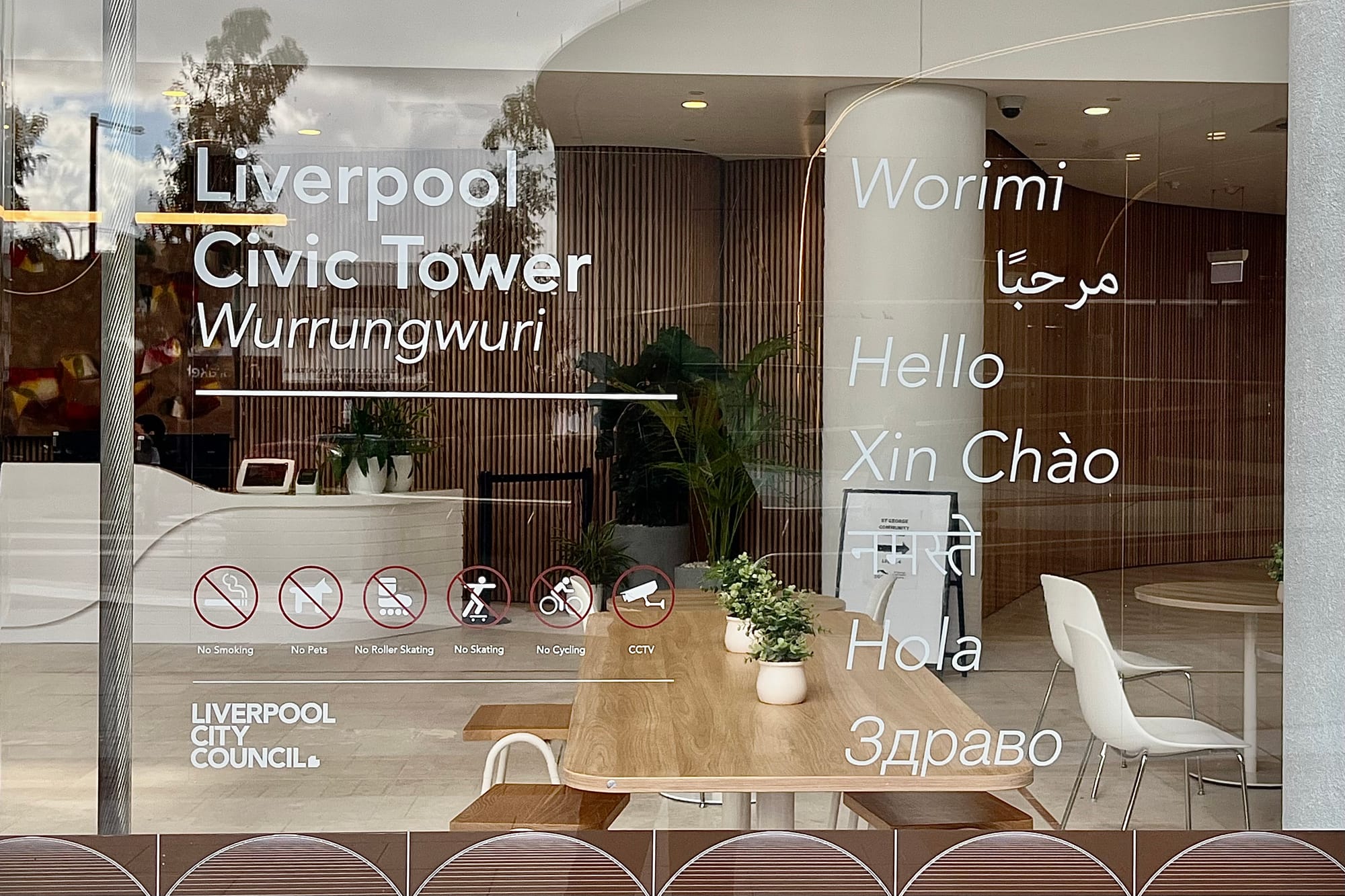
Despite being championed as one of Australia’s most diverse cohorts, the current 47th Federal Government continues to face criticism for its disproportionate representation of ethnicity and culture, LGBTQ+ groups, and individuals with disability.
According to data collected by the Parliament of Australia, 13% of parliamentarians from both upper and lower houses of the Federal Government identified with non-European ancestry, compared to 30.5% of the total national population. This figure includes the 4.85% of members who identify as First Nations peoples.
Senator Jordan Steele-John is currently the only Federal parliamentarian who identifies as living with a disability, comprising 0.44% of Parliament, compared to 21.4% of the general population, according to ABS. Additionally, while 3% of members identify as LGBTQ+, compared to 4.5% of the general population, there are currently no Federal parliamentarians who identify as transgender. Concern towards transgender representation is exacerbated by the Federal Government’s role in overseeing matters of gender-affirming medical and mental health care.
“If you don’t share the same lived experience, how do you make decisions that are going to impact people's lives and make [them] better?” said the Labor candidate, when asked what representation in politics means to her. “The greater representation we have that reflects communities, the better policy we have that is going to help make life better.”
Tu noted the recency and repercussions of the Immigration Restriction Act 1901 (Cth), commonly known as the White Australia Policy. The Act, which was not fully abolished until 1973, restricted non-Europeans from migrating to Australia and purported to deport existing ‘undesirable’ migrants.
Immigrants of non-European descent were barred from Australian citizenship until 1957, which still required the individual to have been a resident for 15 years, before being lowered to 3 years in 1983. It was not until 1971 that Senator Neville Bonner would become Australia’s first Aboriginal and non-European Member of Parliament.
The Labor candidate urges parties to survey and collect data surrounding diversity in order to identify areas which require greater representation.
“What gets measured gets done,” Tu said, “if we actually capture the diversity within the party then we can start looking at different targets and see the depth of representation across communities.”
Earlier this month, the current Fowler MP claimed Labor was “tokenistic” in its 2025 candidate pick.
“This time, they have put in a candidate targeting one specific ethnicity, thinking that’s the only ethnic group that they need to appeal to,” said Dai to Sky News.
Tu asserts that she is “a proud Australian, and I’m very proud of my heritage.”
“Anyone who would attack me or call me tokenistic, I think it’s more a reflection on them than on me. You shouldn’t make apologies for who you are, and everyone should be proud of where they come from and their family history.”
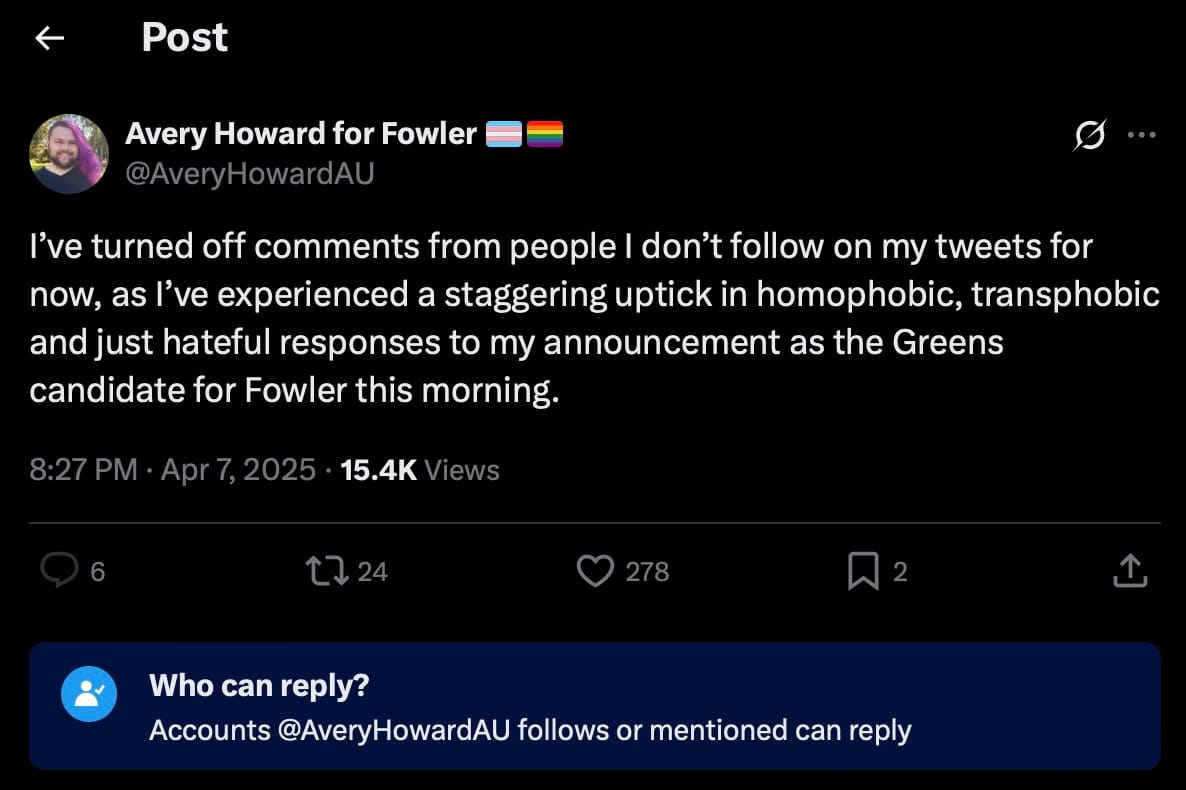
Avery Howard is a non-binary, anti-poverty activist and retail worker running for the second time as Fowler’s Greens candidate.
Two weeks ago, Howard faced online abuse after announcing their candidacy, receiving comments targeting their gender identity, sexuality, and appearance.
In 2017, Fowler voted 63.7% against the legalisation of same-sex marriage, along with having the highest share of non-responses in NSW at 27.6%. While LGBTQ+ visibility and support groups have since increased in the electorate, Sydney’s west and south-west regions are said to lag behind their inner city counterparts when it comes to wider community acceptance.
Despite the backlash, Howard is “not backing down in the face of hate,” and instead, they wish to inspire and advocate for minority groups across the electorate.
“By being present and being a candidate in this election, I feel [that] I’m contributing to diversity and inclusion.”
Vietnamese and Chinese are the top ancestries of Fowler residents, at 16.3% and 11.2% respectively, according to ABS. While not of Vietnamese background, like their main Fowler challengers, Howard believes they can bring something different to the table.
“[While] I can’t bring that specific form of representation, I think I bring something different,” they said. “As those with Vietnamese heritage can see themselves in Tu and Dai, young people and queer people might see themselves in me.”
Tu's journey through the barriers of politics
As a second-generation immigrant and daughter to Vietnamese refugees, Tu never saw politics as a viable career path.
“Particularly in an Asian household, you can grow up to be certain professions – doctor, lawyer, accountant, whatever it is. I don’t think I’ve ever heard ‘politician’ be thrown into the mix.”
“There seems to be a political class and unless you know someone part of that class, it seems completely inaccessible,” Tu said.
While the candidate first joined the Labor Party in university, over ten years ago, she credits former Fowler MP Chris Hayes for urging her to put her hand up for candidacy in 2021.
“It wasn’t just the mentorship, but it was a sponsorship… Of an older, white man who paved the way for me to think ‘this could be something that I can do’ and provided me with that opportunity.”
Tu believes current leaders have a responsibility to increase accessibility for those of marginalised backgrounds to enter into politics.
“Those who have paved the way need to make sure that they don’t shut the door behind them,” she said.
“Once you have that position, make sure that you pave the way for others who want to follow in your footsteps and make it easier for them.”
The changing reality of "safe" seats
Meaningful and accurate representation by MPs requires community engagement, Tu argues.
“I remember one time, a Member of Parliament saying, ‘I love this community, Asians don’t come to me asking for anything’ which is a really disappointing comment, but I think it was just a reflection of how communities engage with our representatives.”
However, the Labor candidate is seeing a positive shift. Tu urges constituents to raise issues of concern with their elected representatives to ensure their voices are heard in Parliament and reflected in policy.
“Western Sydney has primarily been a Labor safe-place,” first-time voter Lanch observed. “Going against the crowd is a lot more difficult. Being outspoken about politics is generally not the culture of western Sydney as it holds more traditional values.”
In light of the previous election’s events, Tu calls on parties and voters to not take safe seats for granted. Instead, she hopes fellow prospective candidates from diverse backgrounds are pushed by parties, arguing that communities ultimately benefit from active electoral races.
With new generations entering the forefront of politics, Tu is ultimately hopeful for increased representation and inclusivity.
“In the community, we are creating our own spaces, speaking up, and giving ourselves opportunities to call out and push back against the barriers that hold us down historically.”
Dai Le MP was approached for comment but declined.