Racism "Deeply Embedded" in Australian Universities, UNSW is No Exception
A landmark report reveals the extent of racism at Australian universities. What is UNSW doing about it?
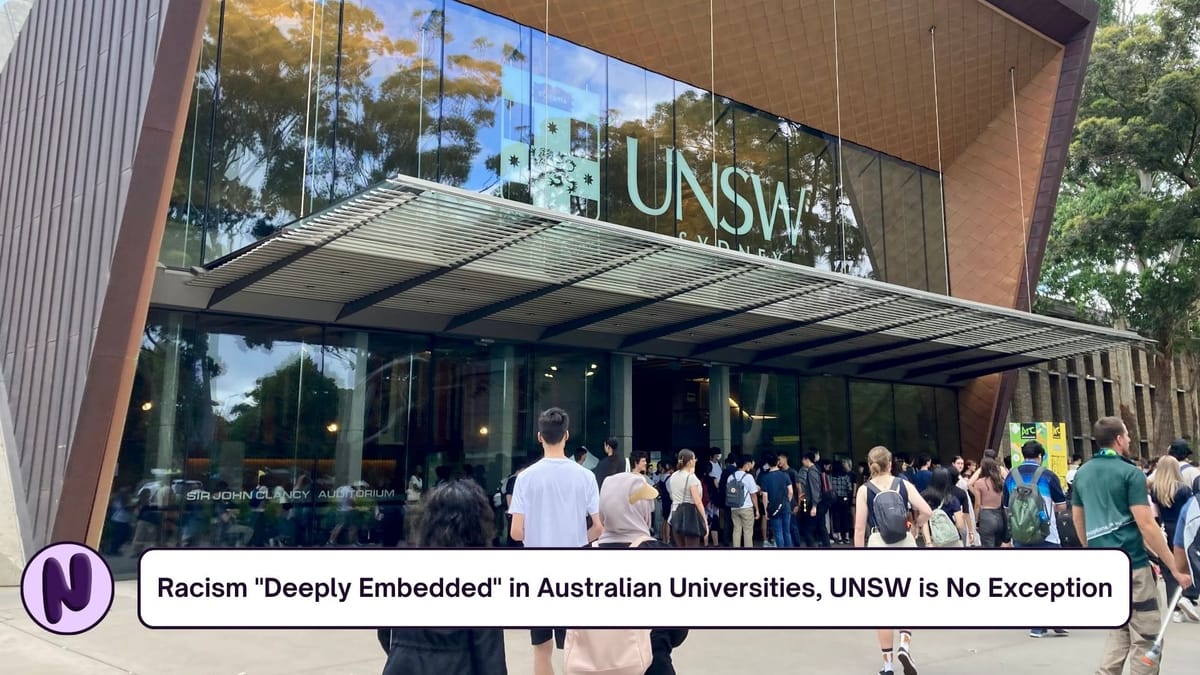
The classic promotional university flyers featuring multicultural friend groups sitting on the lawn, smiling and laughing, cover up a harsh truth that people have to reckon with on campus every day. UNSW recently celebrated “Harmony Day” on the 21st of March, known globally as the International Day for the Elimination of Racial Discrimination, while racial discrimination continues to be a regular occurrence for students and staff alike.
A report from the Australian Human Rights Commission has found that racism is a significant problem at universities across Australia, revealing a systemic issue “deeply embedded in university policies and practices.” The Racism@Uni report, delivered in December 2025 and conducted over the preceding two years, surveyed 76,131 students and staff across 43 universities about their experiences of racism on campus. The survey reviewed the anti-racism initiatives universities have in place and formulated policy recommendations for both universities and the federal government in response to this issue. The report found that racist exclusion, discrimination, and harm is pervasive at all levels of Australian universities, from undergraduate tutorials to the academic boardroom itself, with sweeping reform needed to address all facets of this issue.
15% of survey respondents reported direct interpersonal racism at universities, which occurs when explicitly racist behaviour is specifically targeted at a marginalised person, and a staggering 70% reported experiencing indirect racism, which occurs when discriminatory comments or policies are not targeting a specific person but marginalise certain cultures and communities. A consistently higher proportion of international students reported experiencing both forms of racism in comparison to domestic students. Over 60% of students and staff who experienced direct racism identified their respective peers as the perpetrators, with half of all academic staff surveyed identifying university leadership as well, exposing the true extent of how embedded racism is in every level of the university system.
A Middle Eastern student shared how both staff and students can contribute to racist harm simultaneously: “What is most disturbing is not only the racism I personally experienced, but the lecturer’s complete failure to acknowledge, support, or empathise with the Muslim, Arab, and Palestinian students in the room. While I was speaking about a serious racist attack, the classroom responded with laughter. The environment became threatening.”
There have been a diverse array of communities impacted by racism in Australian universities, including members of the African diaspora, people from across Asia, Indigenous peoples, and Māori and Pasifika peoples. Jewish and Palestinian people reported the highest number of racist experiences at their universities, with 94% of religious Jews and 90% of Palestinians surveyed having experienced racism on campus. Given that the report concluded in December 2025, these figures don't account for the antisemitic terror attack at Bondi Beach and its societal aftermath, which may have caused these figures to increase during the start of 2026.
“I'd encountered antisemitism before, but I had never been scared to be Jewish. In uni, I frequently feel the need to hide my religion,” a Jewish student commented in the survey. Many Jewish students have faced an increasingly adversarial environment on campus, often based on the presumption of guilt for the Israeli government's actions, just because of their faith.
The report put forward a variety of recommendations for universities and the federal government based on three targeted outcomes: a consistent national framework for anti-racism in universities, inclusive and safe university environments free from racism, and accountable universities with trusted, accessible, and effective complaints systems supported by independent oversight.
UNSW already has an independent Anti-Racism Plan and established initiatives like the Anti-Racism Grant in line with most Australian universities, but confidence in existing university processes is low: less than 15% of people surveyed lodged official complaints after experiencing direct racism. A key recommendation made in the report is that all universities should establish mechanisms to evaluate the impact of anti-racism initiatives, which would, at the bare minimum, allow the university community to clearly see the full impact of racism at UNSW for the first time. A guide for UNSW can be found in the University of Melbourne's Anti-Racism Action Plan (2024-2027), a comprehensive scheme co-designed with affected students and staff and structured around acknowledging, understanding, preventing, and responding to racism, with mandated annual reports documenting anonymised incidents and institutional responses. Beyond this plan, the University of Melbourne has updated older policies to cohesively address racism as well, helping to make the most extensive institutional response to racism in an Australian university.
The UNSW Equity, Diversity, and Inclusion Policy is predominantly comprised of vague statements like, "The University will promote clear and accountable policies and practices to support our values of partnership, integrity, transparency and ethical decision making, and respect,” with little further elaboration. The latest Equity, Diversity, and Inclusion Strategy for 2022-25 elaborates with specific goals and outcomes, but sets targets like an “Increase in applications, offers, and enrolments” from students from diverse backgrounds and “Increased positive reputational positioning of UNSW” without mentioning racism on campus as something to consider. The reasons why students who experience racism on campus might have a more negative view of UNSW seem like an afterthought from the current strategy’s wording. Where UNSW’s EDI policies exist in practice, they don’t seem to be focused on making a direct impact on student experience, an example of which can be seen in the Upper Campus multifaith space being left in jeopardy due to the university's future development plans. Almost poetically, at the main page dedicated to UNSW’s anti-racism policy, the link to the EDI Strategy leads to a 404 Not Found error page.
Despite the shortcomings above, UNSW has been innovative in its development of strategies to mitigate racism against its First Nations students and staff. The Micro-Treaty proposal aims to establish power-sharing arrangements with UNSW's Aboriginal communities. It will formalise agreements for the community to lead projects they deem a priority, such as the recognition of Indigenous knowledge systems, social and health development in Indigenous communities, and ultimately reconciliation. The ongoing dialogue with the university is led by an Indigenous Representative Council comprised of members from UNSW campuses across the state, based on a framework first proposed by Professor Megan Davis. While the Micro-Treaty is still in development, the report highlights it as a particularly noteworthy step away from symbolic and tokenistic commitments and a potential model for other Australian universities.
As global tensions continue to increase with little sign of de-escalation, it has become more important than ever to ensure that UNSW can be a place where anyone can enjoy the university community without living in fear of being discriminated against for what they look like or where they come from. The Racism@Uni report demonstrates how far we still are from making that a reality, but also shows a clear path towards achieving that goal. With the report's recommendations and alongside the government and other universities, UNSW needs to take this opportunity to effectively address the systemic issues that are harming its community and holding it back.