“Whose Play Is It Anyway?” 2026 Review
A strong collection of student plays leads NUTS’ first show of term 2
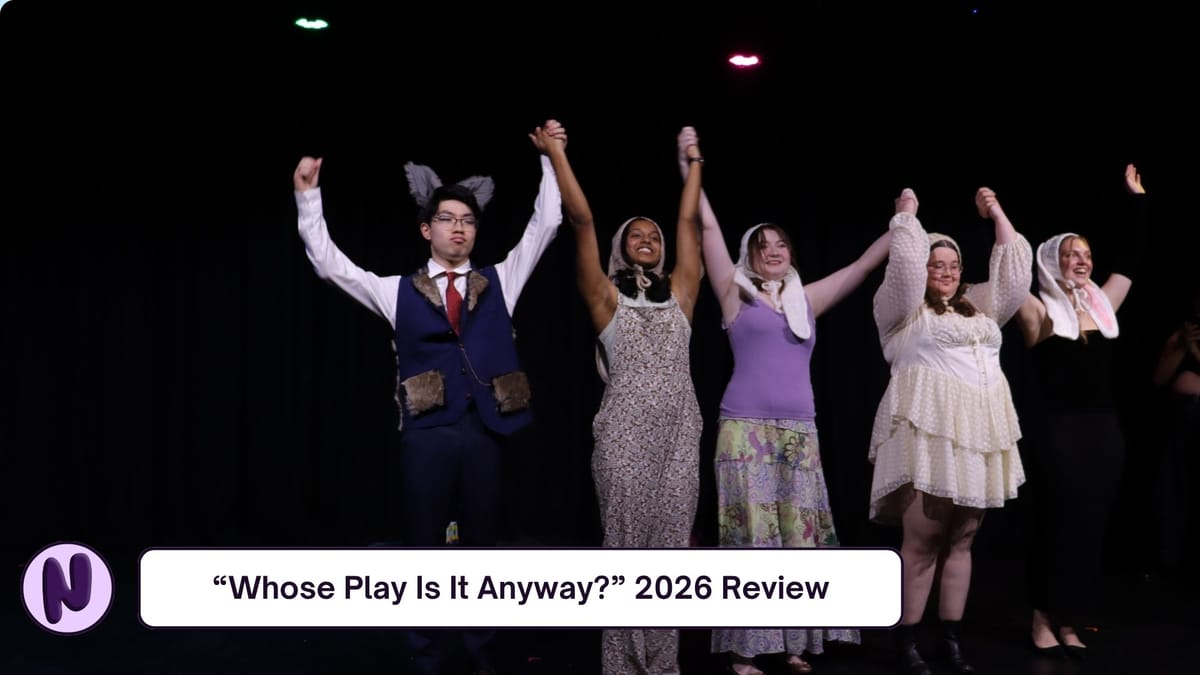
And so, here we are again at NUTS’ 2026 production of “Whose Play Is It Anyway?”, a collection of short plays written by students, and reviewed by me.
This year’s production was almost half the size of 2025, with four plays instead of the previous seven. The consequence being that while there was less variety overall, NUTS was able to fit them all into a single night.
Not to spoil my review too much, but I would also say that the reduced number of plays appears to have led to more consistent quality across the acts.
Ernie’s - written and directed by Rayyan Khan
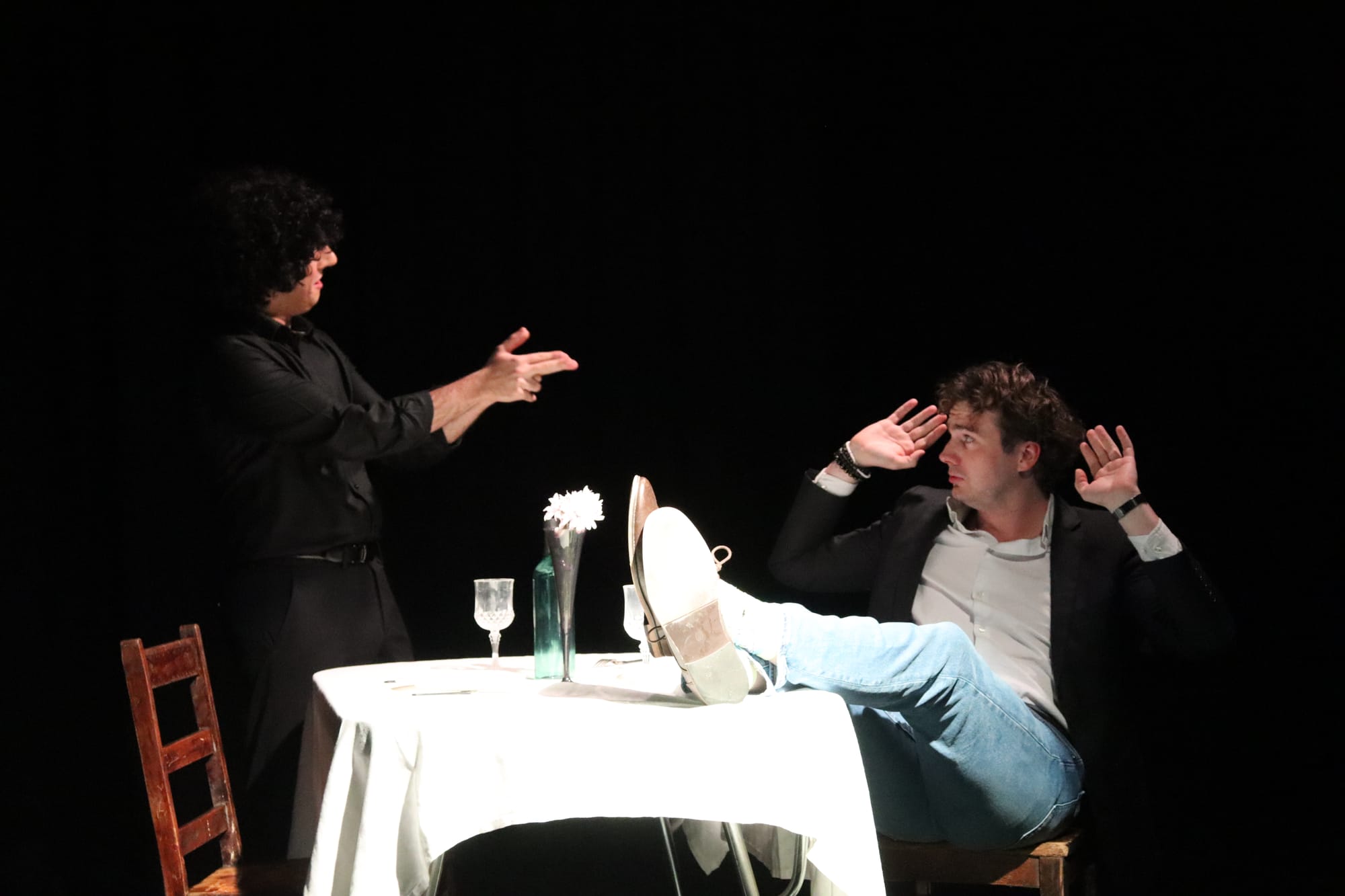
On the surface, Ernie’s is a sitcom-esque setup. A restaurant owner attempts to dupe his high school rival into eating a dish that is far too spicy. Things go predictably sideways, dishes get mixed up, and hijinks ensue.
On a deeper level, the play is an exploration of a refusal or inability to move beyond the horrors of high school. The way adolescent grudges and insecurities can be instantly reignited within a grown man. Or how some of the shallowest 16-year-olds you knew then will never gain a shred of self-awareness.
For all the dry humour throughout, there is a sadness that permeates Ernie’s. None of the characters seem to be happy with the way their lives have turned out, and most lack the conviction to do anything about it. Even the sparse set design builds on the production’s lonely feel.
The highlights are the interactions between the restaurant owner, Anton (George Tsakiris), and the overworked chef, Michelle (Caitlyn Florence). Anton’s habit of wearily deflecting Michelle’s extremely valid critiques with clever turns of phrase is a joy to watch.
Michelle’s frustration and Anton’s melancholy clash well with Tony’s (Jacob Lane) obnoxious presence. Lane gives a strong performance, making it immediately clear why Anton despises Tony even as others might want to be his friend.
At times though, the script seemed slightly confused. I still don’t fully understand the relationship between Chloe (Zarrin Khan) and Anton, and Chloe’s character overall seemed a touch one-note. We never really get the same glimpses into her underlying psyche that the other characters are permitted.
Ultimately, I enjoyed Ernie’s. It paints a compelling picture of despondent lives in motion, exploring how some people cannot help but scratch at scars that should have healed long ago.
月饼 (Mooncake) - written by Roseanna Huang, directed by Heidi Hu
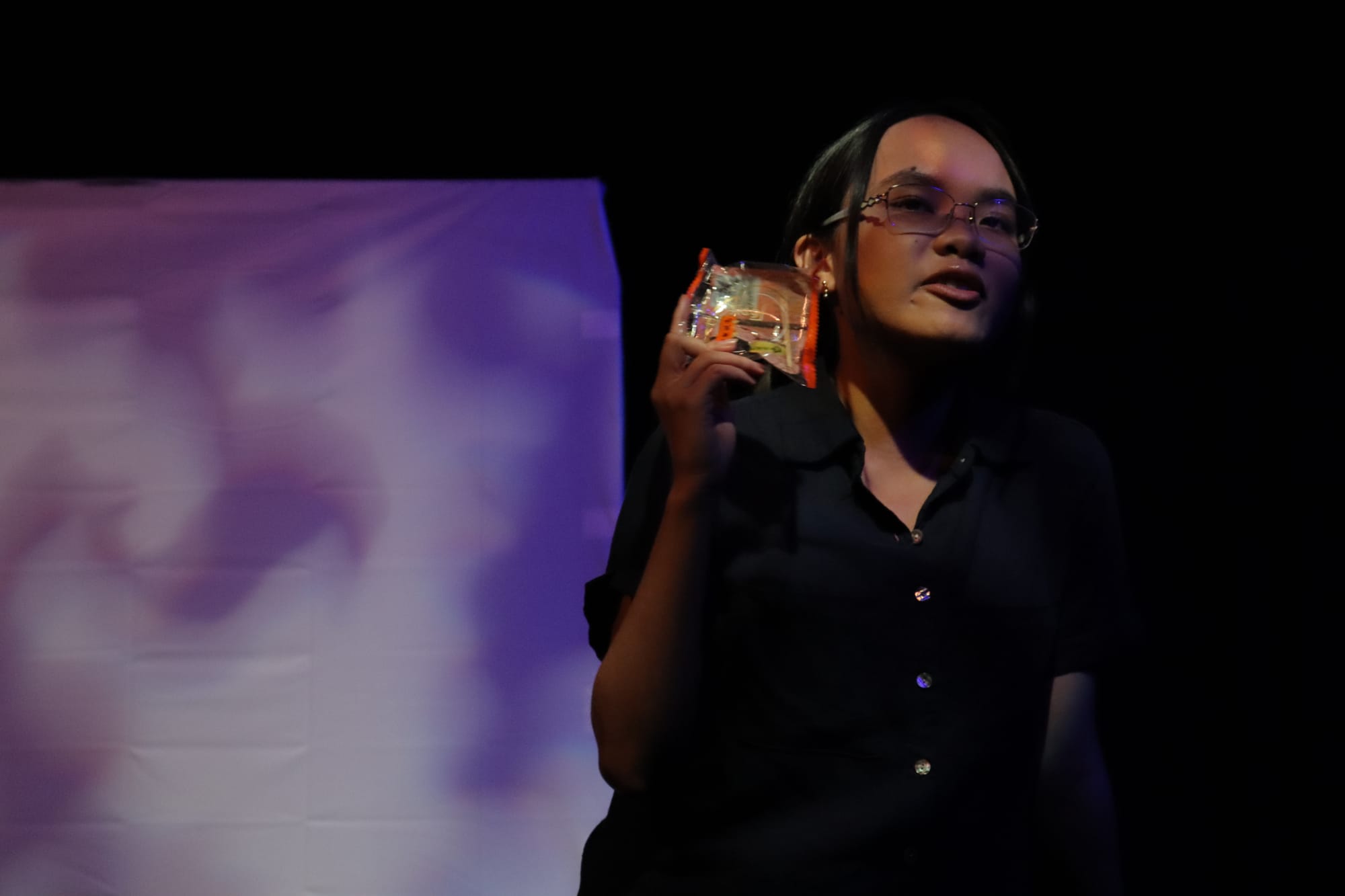
I have never had a mooncake before, but this one-woman show certainly did its best to sell me on them. Rhianna Doncaster’s unnamed character spends much of Mooncake extolling the virtues of the traditional Chinese pastry while eating one in real time.
Doncaster has a really natural performance style that works well for this play. It’s a work that constantly blurs the lines between fiction and reality, with much of Doncaster’s dialogue being directly addressed to the audience. Watching it, I could easily have believed it was a spontaneous stream of consciousness rather than a scripted and directed performance.
Anecdotes about growing up as a Chinese person in Australia were woven into the mooncake consumption. Playing the piano to distract grandparents from an argument, or getting bullied at school for the food they brought from home. It was delivered in an engaging manner, but at times, I was unclear on where this was all meant to be going.
Rest assured though, it was going somewhere. The script became more direct and pointed as it progressed, raising frustrations with recent trends of appropriation of Chinese culture and how that feels for someone who grew up feeling excluded because of their race.
“Don’t applaud me when I leave the stage,” Doncaster shouted at the audience near the show’s conclusion, “This wasn’t for you!”
Finally, I would be doing the show a disservice if I did not mention the beautiful shadow puppets that accompanied several anecdotes. There was an audible gasp from the audience when they first appeared, and they lent a subtle new dimension to what was otherwise an incredibly minimalistic production.
My Flesh and Bones Are Stuck in Your Teeth - written and directed by Charlotte Krautz
Alright, bear with me. This is a strange one.
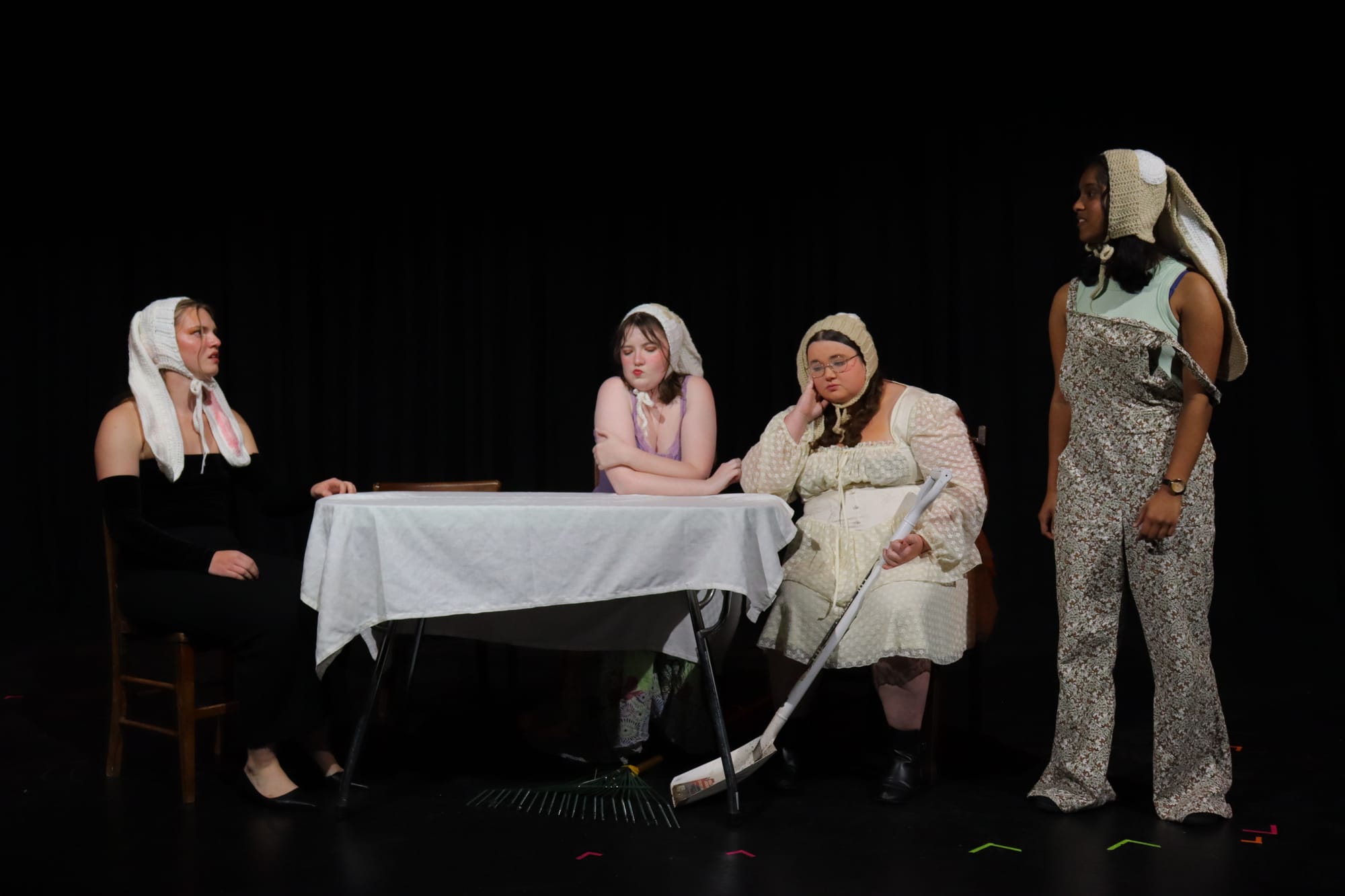
My Flesh and Bones Are Stuck in Your Teeth follows a traumatised family of rabbit performers who insist on keeping their performances going despite the dangers of ‘wolf season’.
I was bemused when the concept was first developed in the opening scene. But the fable-like concept quickly gave way to a genuinely unnerving show. The Wolf loomed over every conversation, and the dark sets gave the impression that a terrible fate was waiting behind every corner. The rabbits hid away in their warren, like Londoners in bunkers during the Blitz. It was a tense, oppressive atmosphere, built on by the quaint set dressings and the ever-present hum of radio static.
Said rabbits (Charlie Thomson, Kathleen Thomas, Jasmin Schofield, Natasha Townley) navigated a fractured family dynamic, balancing survival with aspiration, fear with love. It’s a strong performance from the four, building a portrait of scared and damaged people doing the best they can in a terrible world.
There was a lot to like about this play, although I do unfortunately have to mention the ending. The production did such a good job with the setup that when we finally met the wolf (Hayato Kato) and found him to be a flamboyant, scheming, somewhat camp villain… it just couldn’t live up to the image the audience had built up in their minds over the past 20 minutes.
That’s not to say Kato’s performance was bad, by any means. It simply felt out of place for the production it was in. And what we learned about the deeper nature of the wolf felt unsatisfying compared to the mystery that had been established. Perhaps some stones are better left unturned.
Second Skin - written by Arthur Brown and directed by Olivia Calverley-Haack
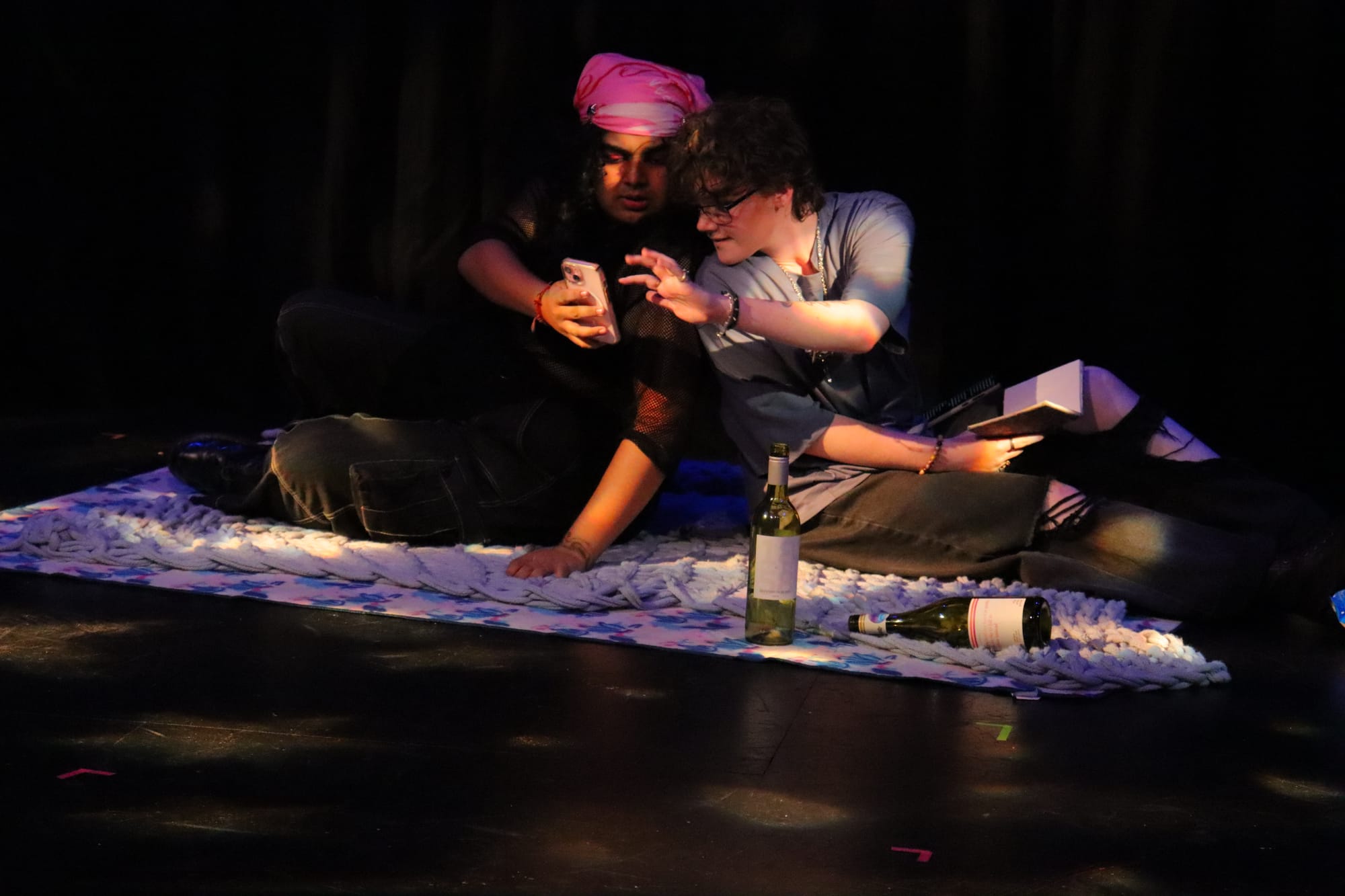
In many ways, Second Skin is the simplest of the plays in this year’s WPIIA. A conversation between two friends, nothing more and nothing less. But it was also arguably the strongest, with every line of the conversation being well-crafted and engaging.
Over the show’s runtime, we followed Eva (Surya Negi) and Iris (Maeven Elli Cox) as they avoided talking to anyone at a party by sequestering themselves upstairs and experimenting with a Temu tattoo gun.
In the performance I attended, Cox was unfortunately unwell, and Iris was instead portrayed by Hades Chivas. Given the short notice, Chivas was forced to rely in part on a script on their phone. The performance was strong despite these circumstances, and the fact that it made sense in context for Iris to be regularly scrolling on a phone meant the change was far less noticeable than it otherwise would have been.
As I indicated earlier, the dialogue is really the star of the show here. It came across as very natural and genuine, with both cast members doing it justice. It felt like we were seeing fragments of a very real and raw conversation.
Time skips were also used very effectively, ensuring that we didn’t linger unnecessarily; the moment a scene was looking like it might begin to overstay its welcome, we jumped forward to the next interesting point of the discussion.
While much of the play embodied youthful angst familiar to many university students, the two protagonists' trans identities remained central to the work. Being trans is a core part of who Eva and Iris are, which, in turn, shaped the dialogue and the play in a way that feels entirely natural.
The narrative of Second Skin is concerned with capturing a moment in time. It’s an examination of two individuals and how their minds and experiences have shaped their lives and their bodies.
Plus, they do the Nutbush. So that’s pretty great too.