March 2025 SRC Wrapup
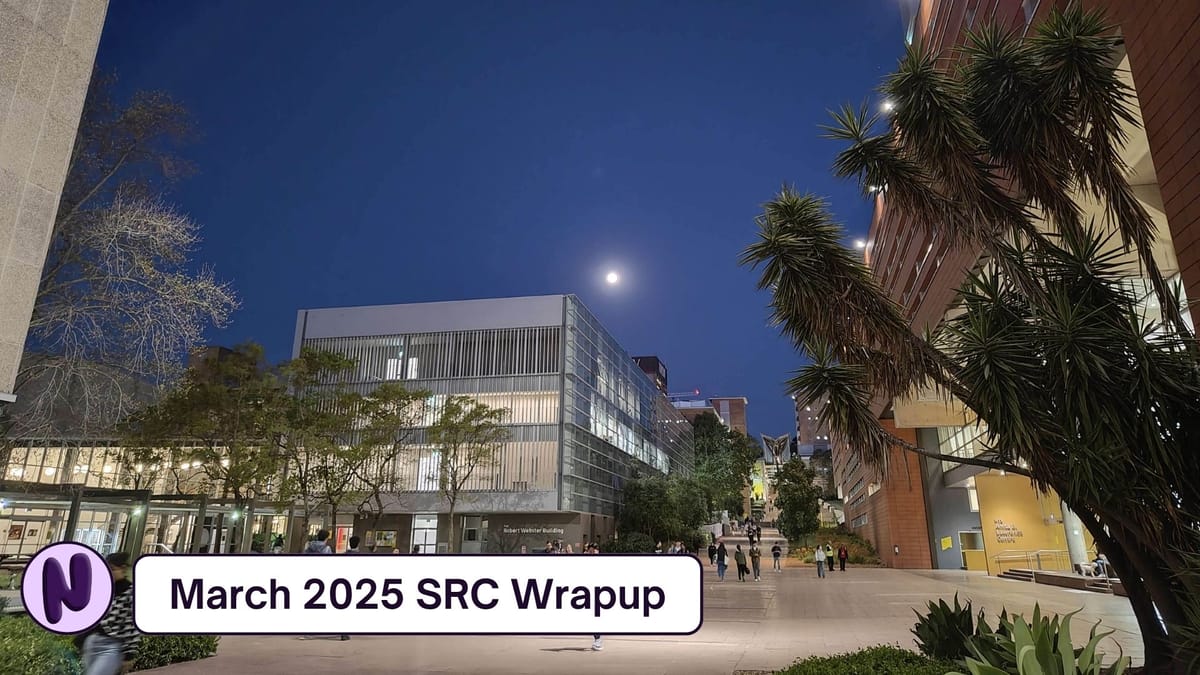
President Diya Sengupta started this meeting, after the Acknowledgment of Country, by reminding the council to check their emails and keep on top of their commitments. In what felt like a critique of a particular member of the SRC, Sengupta said that her job was to be President and that it’s “not my job to be your mother.” She then addressed the media, saying that for the record, no one can say this critique is about politics because there is “nothing political about weaponised incompetence.”
Motion 1: from Environment Officer Emma Terry of SAlt, for the SRC to take a stand against UNSW’s ties to the fossil fuel industry.
Terry started by saying that given that there are “floods the size of Texas in Queensland,” the University shouldn’t be expanding the fossil fuel industry. Students with Disabilities Officer Conroy Blood seconded the motion, saying they were happy with what the Environment Collective have been doing this year, as well as calling out the University’s greenwashing.
General Secretary Akash Nagarajan abstained from the motion, and was promptly heckled by the SAlt bloc, with one of them asking, “Who’s your favourite fossil fuel executive?” “Or oil baron?” another called out. Thus began what must be described as the worst SRC meeting for this General Secretary, who didn’t even bother putting up a fight or giving any kind of reaction back.
SAlt member Lachlan McGrath came up to speak for the motion, also criticising Akash. McGrath, however, was praised by Sengupta, who said, “Oh my God, thank you” for him bringing his own timer so he could keep track of his own speaking time.
Education Officer Jamie Tyers from SAlt said it was pathetic for Akash not to speak to the reason he chose to abstain, and Officer Terry concurred, saying that Nagarajan needs to grow a backbone. There was not a peep from Nagarajan in response.
Barring Together Again’s council members, the motion passed unanimously.
Motion 2: presented by SAlt Councillor Louisa Chen, on behalf of the Welfare Officer Brendan Tate, to have education students refunded for a paid mandatory course resource that cost 80 dollars.
SAlt councillor Anais Williamson speaks for the motion, also bringing her own timer. By this stage in the meeting, it seemed like all the usual partisan tensions had faded. Some frustration was directed at General Secretary Nagarajan, whose choice not to abstain from the motion prompted grins from Officer Tyers.
Queer Officer Alyss Cachia spoke for the motion, saying that while there are ways to get around textbook charges, people shouldn’t have to get around them. Given that the University is using prerecorded lectures from 2020, they should to able to absorb more costs like this, she also said.
The motion passed unanimously.
Motion 3: from Education Officer Tyers of SAlt, for the SRC to oppose the global rise in militarism.
Tyers amended the motion to also say that the SRC condemns right-wing pro-war events on campus, one of which had occurred before this meeting. President Sengupta seconded the motion. Tyers said the world is getting more dangerous, mentioning the U.S. and Russia’s talks to carve up Ukraine, the bombing of Yemen by Western forces, and the collapse of the peace process in the war in Gaza, which Tyers said even right-wing papers call ethnic cleansing.
Sengupta spoke for, saying that the University is propagandising students, which ignores the lived experience of students coming from war-torn countries.
The motion passed unanimously.
Motion 4: from SAlt councillor Louisa Chen to condemn Labor’s inaction on the cost-of-living crisis.
She states that given the amount of handouts given to big corporations, the tax cuts are nothing. She said that workers and students deserve more than what Labor is offering. The upside of how late this report is coming to you (Sorry about that, folks!) is that we can see that, electorally, this sort of very minor cost-of-living relief was effective. As someone who predicted a Labor majority coming into the election, I’m still feeling quite confused at the result, especially given the current economic climate. I guess the opposition own-goaling themselves every few days of the campaign certainly helped.
SAlt councillor Jacob Mulholland also spoke for the motion, saying the SRC shouldn’t just cheerlead the Labor party and their budget.
General Secretary Nagarajan and Councillor Dan Gulic, both from Together Again, then said they would vote against.
Akash, speaking against, using one of former U.S. President Joe Biden’s favourite phrases, said we shouldn’t compare Labor to the almighty, we should compare them to the alternative. He said that the budget is the most progressive we’ve seen in 50 years, boosting public school funding, cutting HECS debt and bringing in free tafe, as well as the Housing Australia Future Fund. The fund was one of the policies the Greens heavily critiqued and initially blocked in the Senate for not going far enough on things like social and affordable homes, as well as the fact that it was dependent on a stock market return, which is this economic environment especially after Trump is not guaranteed.
Queer Officer Cachia rebutted by asking why we are comparing ourselves to the Liberals in the first place, and why public housing is being bulldozed. They finished by stating that Labor is failing workers at every level.
Councillor Gulic seemed most understanding of the idea that Labor needs to be doing far more to aid people in the cost-of-living crisis, but said we should be balanced in this issue and acknowledge minimum wage increases as well as increased funding to boost bulk-billing.
Officer Blood, speaking for the motion, asserted that by the time the full public school funding kicks in, there is a good likelihood a Liberal Government will be in power that will scrap the funding.
One SAlt member by the name of Owen said that Labor has made the cost-of-living crisis worse as the profit-to-wages ratio has increased in favour of profit since 1974. He also called out the “dead-end” campaigns of student unions for Labor every 3 years. He said that crumbs are the best Labor can offer, and random construction jobs that Labor will bust the unions for anyway. The motion then passed without anyone but the Labor-affiliated council members voting against.
Motion 5: from Together Again councillor Dan Gulic to standardise assessment due times.
Gulic said that 6 pm deadlines, for example, are unfair for working students. Jamie Tyers seconds the motion.He says he is noticing a trend where Labor-affiliated council members abstain or vote against motions sometimes without speaking to why they are doing this. The SAlt bloc tries to wrangle with the Labor bloc over the NUS’s ‘Put the Liberals Last’ campaign, which they said is a glorified ‘Vote Labor’ campaign. President Sengupta asks that they move this to question time. The motion passed unanimously regardless.
Motion 6: also from Gulic, to cap assessment weightings to 40%.
He states that one assessment shouldn’t be able to single-handedly decide your course result. He says this is a low cost and tangible solution to benefit the mental health of students
Ethnocultural Officer Ethan Lin seconded the motion, saying the tight turnaround from midterms to finals puts unrealistic stress on students, who cannot absorb the feedback they receive because of the short turnaround.
Officer Terry speaks for the motion, saying that the structure of assessments is so penal to students because the University wants to save on labour costs. The problem for them is underfunding, which incentivises money squeezing. Terry then says to Gulic that Labor is the enemy of students for this reason.
The motion passed unanimously.
Motion 7: from President Sengupta of 365 for the SRC to push for the University to adopt a universal short extension system.
Sengupta said they are important to students but the University doesn’t understand this, and only has an opt-in system, which only 11 percent of courses have signed on to. Sengupta also states that short extensions shouldn’t be a once-per-term thing. Sengupta also expressed her disagreement with the Academic board, which had felt students would take advantage of this system opportunistically (Oh bother, students are going to use the system we set up to be used, whatever will we do?)
Officer Blood said the cost-of-living crisis exacerbates issues with getting assessments done on time, and mentions that their friend was denied an extension because they were looking after their mum in hospital.
Queer Officer Ren Woodward speaks for the motion, saying that this model would make learning more equitable for those with various commitments, and raised the issue of expensive doctor’s notes.
Motion 8: from Ethnocultural officer Ethan Lin of Edge for the SRC to oppose the rise of Islamophobia and Antisemitism on campus and in the community.
The motion initially lapses when no one seconds it due to a lack of clarity on a part of the second paragraph of the motion. Lin brings forward the motion again with the amendment requested by Tyers to remove this section. Lin states that with the recent spike in discrimination, including on campus, student representatives have a responsibility to fight back.
Cachia speaks for, stating that criminal elements are using antisemitism to distract from their crimes, as evidenced by the Dural van hoax pulled off by organised crime, which was used to crack down on activists.
Blood says that while there have been fabrications of hate crimes from organised crime, antisemitism is still on the rise. The motion then passed unanimously.
Motion 9: from Women’s Officer Ellena Cheers-Flavell from 365 that the UNSW SRC Supports demands for Belgian university KU Leuven to take disciplinary action against a medical student found guilty of rape.
KU Leuven is an exchange partner with UNSW, as she pointed out, it was where she went on exchange to. Cheers-Flavell gave context, saying the student was also a gynecologist in training, and that despite his guilty verdict, he was given no punishment or fine and has only been suspended, not expelled.
Councillor Jenna Harris speaks for the motion, pointing out that few rape cases are taken to court, never mind found to have a guilty verdict, so action should be taken by UNSW on this matter.
Cachia states that the legal system destroys women who speak up, and despite the hurdles there are to get a conviction, this person went ahead with the case, and their attacker was not even punished despite the verdict.
The motion passed unanimously
Motion 10: from Education Officer Jamie Tyers for the SRC to support an open letter for free speech in the United States sent by a U.S. student group.
The letter was prompted by the unlawful detention of Pro-Palestinian activist Mahmoud Khalil, targeted for leading a student encampment.
Cachia speaks for the motion, bringing up the potential deportation of a trans USyd student for writing pro-Palestinian messages on whiteboards, who is a refugee from a place where trans people are jailed.
President Sengupta says collectives should sign onto it on the collective’s behalf
Matters for discussion.
Coming to matters for discussion now, Officer Cachia called for a united campaign against estate management, who won’t refill the free period products in bathrooms, despite being able to weekly when they had said they would only do so monthly, then fortnightly. She says that people from Clubs have reached out regarding this matter.
President Sengupta said that estate management will only renew Foodhub’s lease in increments of 3 months, which keeps Foodhub in limbo.
Officer Blood states “they’ve been a bitch” to deal with, and they don’t respond to emails, and will lock rooms booked by clubs then not respond to calls asking for the room to be unlocked. Blood says an open letter isn’t the way to campaign against them.
Cachia suggests that perhaps an open letter could be stuck to estate management windows.
Officer’s reports.
For their President’s report, Diya Sengupta highlighted that the Clothes Hub initiative is up and running, stymied a little by someone throwing a coffee cup into the clothing bin, but it was only a tiny setback. She also outlined the SRC’s enrol to vote campaign, which also informed students on how Australia’s voting system works. Finally, she made clear that digital ID cards are already in progress toward becoming a reality, but since UNSW works at a slow pace, this could not be expected soon
Officer Terry asks General Secretary Nagarajan how he can justify the ‘Put the Liberals Last’ campaign, which has been characterised above by some council members as a glorified vote Labor campaign. She points out that Labor’s housing minister, Claire O’Neill, is against bringing house prices down. She finishes by saying that the worst thing is not the Liberals getting into government, the worst thing would be saying this is as good as it gets.
Nagarajan argues it is not a vote Labor campaign. He mentions something about the pamphlets that were given out as part of this initiative. 365 councillor Joseph Bellia asks Nagarajan who made those pamphlets “by the way?”
President Sengupta says she did because Nagarajan didn’t, then asks why he didn’t put a motion to SRC to put the Liberals last, to which he answers that he didn’t have time.
In response to a comment from a SAlt member, Nagarajan says he disagrees with the idea that all the government has done has been to attack workers and says it is important to know how to read statistics. Sengupta shoots back, saying stats show Labor is not working in the best interest of workers or students. Coming back to the enrol to vote campaign, Sengupta says the free donuts, which were a huge draw to the event, were her idea.
In Tyers officer report, he said he wanted to contrast with the Labor people, who he said only want to offer nothing but crumbs to people, and says the only way to keep the right-wingers out of government is to be genuinely left-wing to unjustify the right’s economic arguments
Women’s officer Cheers-Flavell asks what initiatives SAlt has for the election.
Tyers mentions the Victorian Socialists, but Cheers-Flavell asks specifically what they are doing at UNSW. Tyers clarifies they aren’t campaigning or endorsing anyone in New South Wales, but says she should grab a copy of their paper, Red Flag. She asks if it’s free. “No,” he softly responds, blushing.
Ethnocultural officer Lin reported that the first cultural collaboration grants have gone out, and gave thanks to the President as well as to the International Students’ Officer for their help on the project.
The Indigenous officer Brydie Zorz raised that she was creating a new Indigenous Collective social media page after the preceding 5 had been zucked. They also highlighted how the Bringing Them Home Report anniversary was over that weekend, and that not many of the recommendations have been implemented.
Queer Officers Cachia and Woodward outlined that they were working with Arc and UNSW EDI for an autonomously run UNSW Mardi Gras float.
Officer Blood said they were still in the process of undoing 10 years of what they called “Labor mess,” where nothing was done within the collective, and as a result membership was picking up.
Councillor Bellia, in their report, mentioned they have raised student concerns to Arc about estate management, regarding the lack of air conditioning in rooms, which led to one student having to break their fast due to the heat.
Officer Woodward asked the President if the long-awaited Arc Clubs tribunal was coming along, to which Sengupta assured that it was and that it was a matter of trying to get things right the first time around and that legal concerns were being assessed.
Meeting evaluation.
In the meeting evaluation, Officer Terry said it was another fun meeting in person and far better than meetings back when Labor was in power. She reiterated her desire to have abstainers speak to their abstention. Given that Nagarajan was not spared beratement despite his attempt to avoid conflict by not addressing as much of it as possible, they might just get their wish.