UNSW to return to semester-based calendar
After a controversial 6 years of trimester-based timetabling, UNSW is returning to a semester-based system.

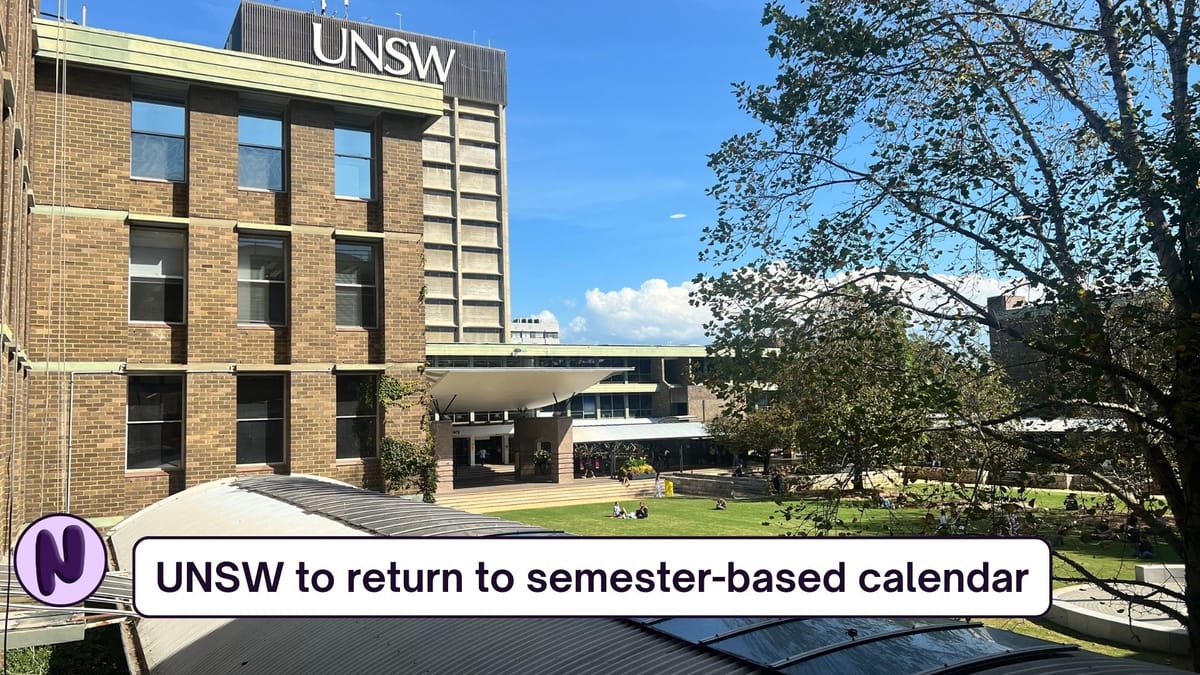
After approval from the University Council on Monday, Vice-Chancellor Attila Brungs announced earlier today that UNSW will be moving to a “flex-semester” system for UNSW’s primary academic calendar. The change is welcome news to students and staff alike, with a poll conducted by Noise finding that 80% of students were in favour of a semester system.
This academic calendar is expected to take effect in T1 of 2028, pending significant construction of new teaching spaces to enable the increase in students on campus during teaching periods. The calendar will be composed of 2 standard 12 week semesters (13 weeks each including a 1 week mid-semester break for each), as well as optional summer and winter terms, each of which will be 6 weeks long. The exam period for standard terms is also only 14 days long, with a 7 day “stuvac” between the end of the semester and the start of exams.
Hexamesters for certain postgraduate courses (including some Masters-level and Graduate Certificate programs) will continue to run under the new system, although with some tweaks to better align with the main calendar. New hexamester courses are also expected to be introduced for “specific student groups, typically postgraduate learners and professionals looking to upskill”.
In a message emailed to all students earlier today, the University assured that “for those students whose program will straddle both the current calendar and the new flex-semester calendar, the University will work to ensure minimal disruption to your studies and will work with you to resolve any issues with your study load and facilitate the completion of your degree program on time.” This is welcome news to those who were impacted by the change to the 3+ calendar, with many students having to extend their degrees by up to a year due to the lack of support.
The flex-semester system is designed to reduce study load per week during the academic terms (one of the main criticisms of the current trimester system), as well as simplifying exchange and “experiential” opportunities. It also assists students in programs which require placements or industry experience, such as Education programs, and enables staff to more easily attend domestic and international conferences, which are typically scheduled to suit teaching staff using a semester calendar.