Students Confront Politicians on National Day of Action for Palestine
Rucha reports on the UNSW contingent of the protest.
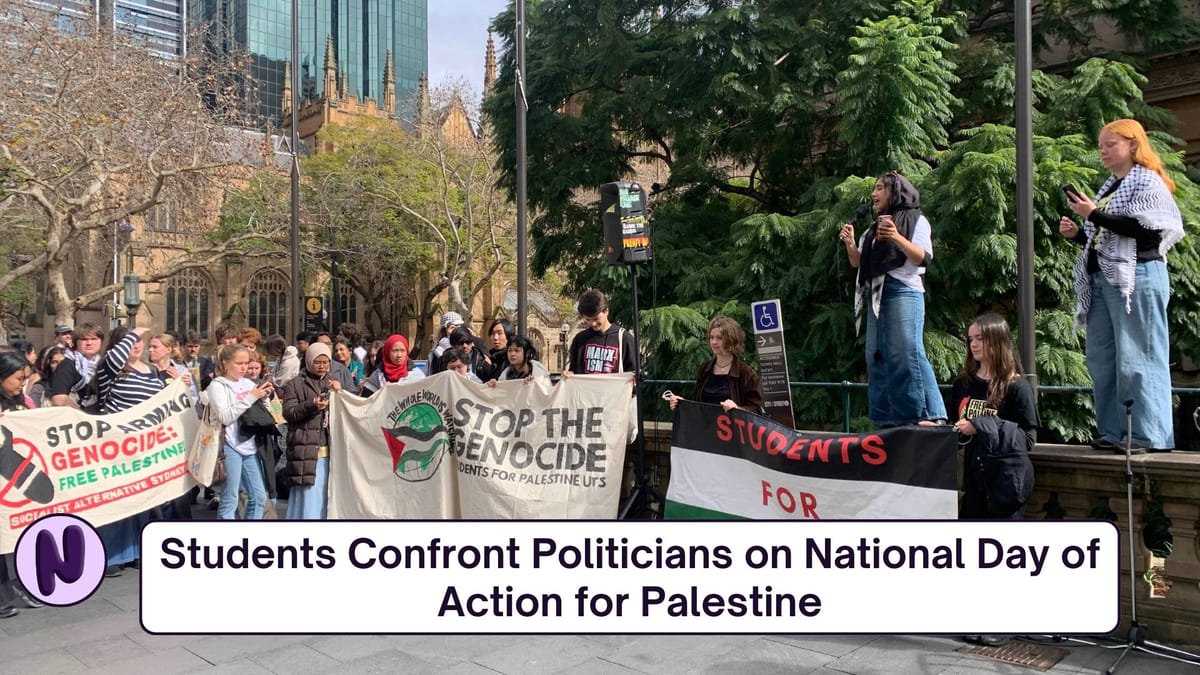
Hundreds of students across Australia skipped school and university last Thursday for the National Day of Action for Palestine, calling for an end to Israel’s genocide in Gaza. Run by the National Union of Students and Students for Palestine, the strikers had three main demands: Australia to sanction Israel, an end to the repression of Palestinian activists and universities to disclose and divest from weaponry investments.
In Sydney, the UNSW contingent met on the Main Walkway and departed from the Anzac Parade light rail at 11 am, heading towards the Labor Party’s headquarters in Town Hall. However, the Labor Party met them earlier than expected in the form of Social Services Minister Tanya Plibersek, who had the misfortune of catching the same light rail.
When approached by UNSW Environment Officer Emma Terry for comment on Australia’s unwavering commitment to economic ties with a genocidal state, Plibersek was more concerned about her own non-existent right to privacy. She questioned Terry “Did you ask my permission to start filming?”, meaningless in a public space, and refused to answer any of her questions. Eventually, she abruptly exited the light rail and briskly walked away to avoid the questioning.
Once the UNSW contingent arrived at Town Hall, it joined the USyd contingent and convenor Jasmine El-Rawi from Students for Palestine, as well as hundreds of other university and high school students. Speeches were made by UTS Ethno-Cultural Officer Salma Elmubasher, Emma Terry from Students for Palestine UNSW, USyd SRC General Secretary Grace Street, Jewish Council Executive Bart Shteinman, and Josh Lees from Palestine Action Group.
Protestors marched down George Street, carrying signs demanding an end to the genocide, Palestinian flags, and keffiyehs. Outside the Labor Office, Jasmine El-Rawi also led chanting “Albanese, you can’t hide, you’re supporting genocide”, with protestors using loudspeakers and creating disruptive noise levels.
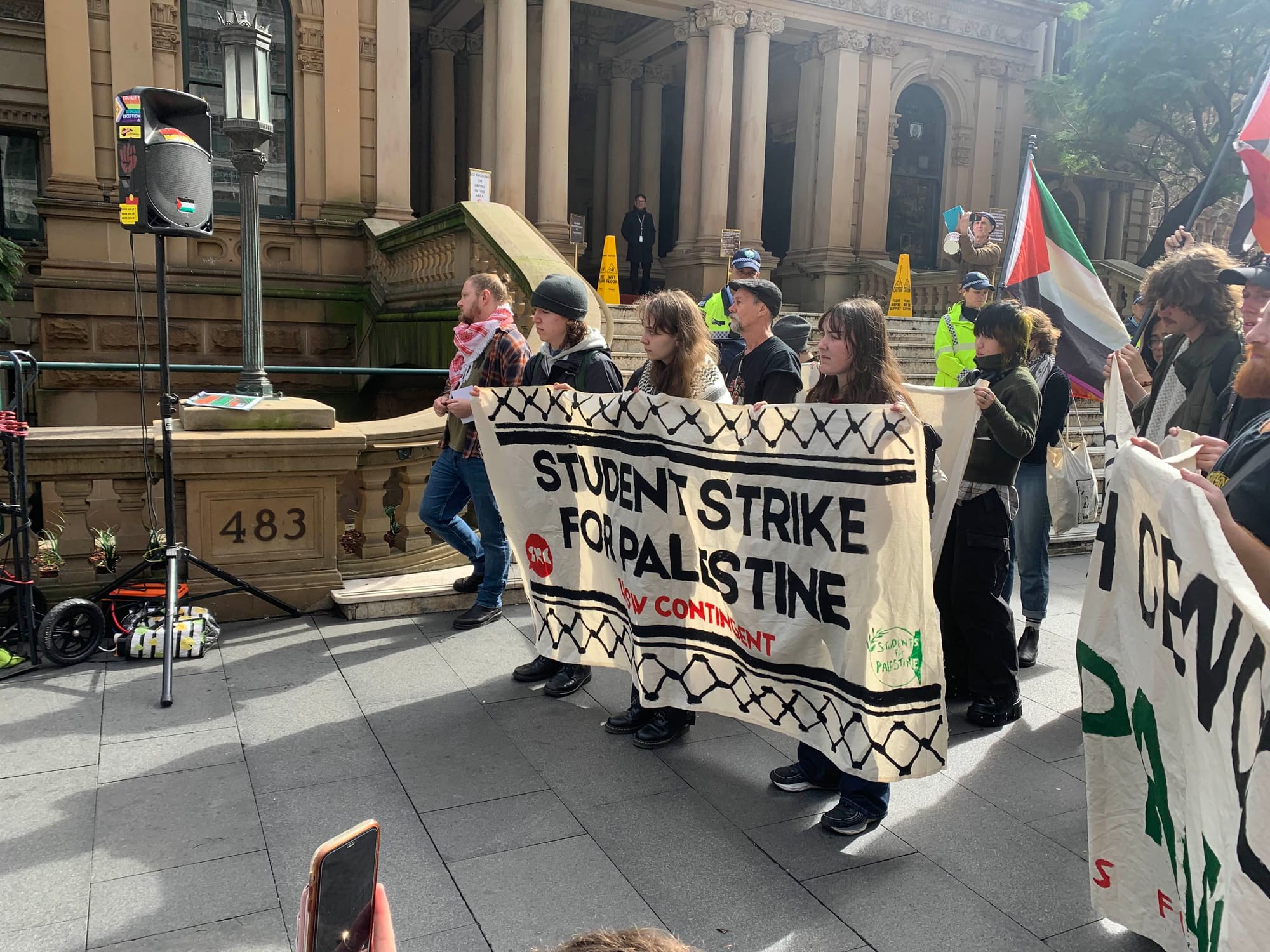
A major demand of protestors was that universities disclose and divest from weapons companies contributing to the genocide. UNSW currently has $2.973 million in financial investments in weaponry and has yet to respond to the protest.
On 11 August, the Australian government announced it would follow other nations in recognising a Palestinian state at the UN General Assembly session in September, a move it states was compelled by “[Israel]’s failure to comply with its legal and ethical obligations in Gaza”. The effectiveness of this announcement in combating the genocide is doubtful. In a statement responding to the announcement, Palestine Action Group described the gesture as “empty” due to the absence of any accompanying economic sanctions.
Israel's ambassador to Australia Amir Maimon has also stated that the recognition of a Palestinian state will “not change anything” in terms of Israel’s offensive strategy or humanitarian aid blockade. So far, the Australian government has not committed to cutting the two-way arms trade with Israel or imposing sanctions.