
Lifeblood Opens Doors to Gay and Bi Men (and also Trans Women and Sex Workers)
Alyss takes a look at the new blood donation rules.

The Announcement
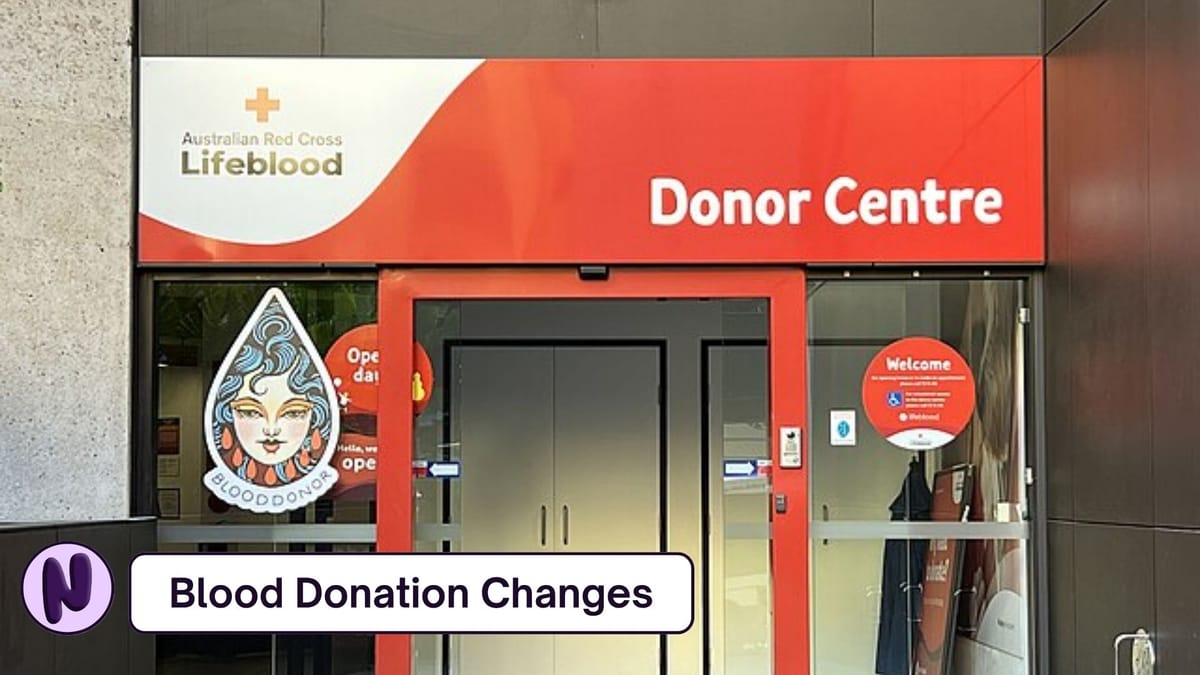
It was announced on June 18th that Lifeblood will be lifting many restrictions relating to populations deemed to have a higher risk of contracting HIV. Despite much coverage solely focusing on gay and bi men, this announcement also expands access for trans women, sex workers, people taking PrEP (HIV prevention medication) and anyone in sexual contact with the aforementioned populations. The lifted 3-month wait-time restrictions allow for the donation of plasma (one of three donation types) regardless of sexual activity from July 14th. Plasma donations were specifically loosened due to existing evidence towards its safety associated with the process of pathogen deactivation during plasma processing. This will go a long way to improving the supply of plasma, with an estimated 600,000 possible donors now eligible.
The Therapeutic Goods Administration (TGA) has approved measures to change eligibility for whole blood and platelet donations, planned for 2026, removing gender-based sexual activity rules. The screening questionnaire will instead ask questions about sexual activity regardless of gender or sexuality. Additionally, most sexually active folks in long-term monogamous relationships (6+ months) will be eligible to donate whole blood or platelets regardless of sexuality or gender. There is an additional commitment to reviewing this policy as evidence becomes available.
Trans People and Lifeblood
A key issue that does not seem to be addressed is the backhanded inclusion of trans and gender-diverse people in the announcement. While Lifeblood affirms its commitment to people of all genders, you will find that when Lifeblood limits donation based on those who have had sex with a male, transgender people are also thrown into the same box. If a person's partner is a trans woman, the receptionist will awkwardly ask you to tick the ‘sex with men' box, as I found out personally last time I tried to donate with a group of friends. Most communication fails to mention this unless you’ve done significant clicking through Lifeblood’s FAQs. While the proposed changes in 2026 will do a lot to resolve this issue, the question will remain from July 14th, as many people will be sure to find out due to the failure of Lifeblood and wider media to clearly articulate this detail.
The Coverage
The majority of the coverage and announcements of this new policy completely fail to mention the existence of trans women and sex workers in this policy change. What should be a win for a community that has, for far too long, faced so much stigma has been an absolute punch in the gut. LGBTQ+ advocacy organisations, politicians, and news organisations all seem afraid to be associated with trans women and sex workers, which is frankly beyond disappointing for what should be a win for all those involved. Where conversations of stigma and the shame around HIV were had with gay and bi men, others deeply involved in this topic have been pushed to the corners of the conversation, trying to pick apart articles to figure out what this means for people who aren't gay and bi men. While this is a fantastic win in the space of blood donation and queer people, I can’t help but be left with a sour taste in my mouth.